Mount Tai: Discover China’s Sacred Mountain and Its Rich History and Culture
Mount Tai, located in Tai'an City, Shandong Province, is one of China's most famous mountains and holds an important place in traditional Chinese culture. As the "foremost of the Five Sacred Mountains," Mount Tai not only boasts magnificent natural scenery but also carries thousands of years of history, religious, and cultural traditions.
For foreign tourists, Mount Tai is not only a mountain suitable for climbing and sightseeing, but also an important destination for understanding ancient Chinese mountain worship, traditional architecture and historical culture.
Where is Mount Tai?
Mount Tai is located in Tai'an City in central Shandong Province, not far from Jinan, and is relatively easy to access.
The main peak of Mount Tai, Jade Emperor Peak, is about 1,545 meters above sea level. Although it is not the highest mountain in China, Mount Tai holds a very special place in Chinese history and culture.
The mountains are majestic with undulating peaks, and ancient trees, streams, stone carvings, temples and ancient buildings are scattered among them, forming a unique natural and cultural landscape.
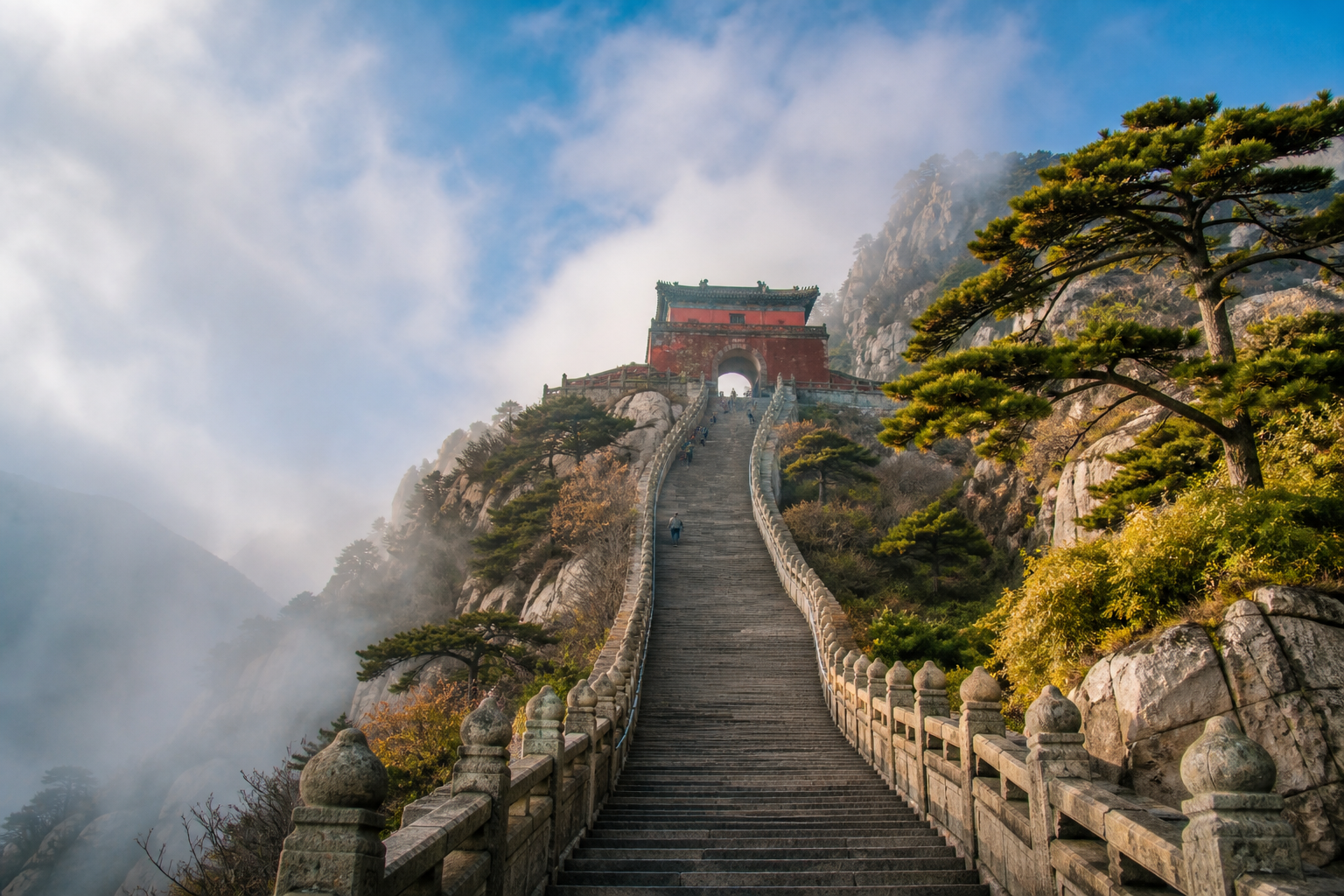
The foremost of China's Five Sacred Mountains
In traditional Chinese culture, there is a saying about the "Five Sacred Mountains," which are Mount Tai in the east, Mount Hua in the west, Mount Heng in the south, Mount Heng in the north, and Mount Song in the center.
Mount Tai is known as the "Eastern Peak" and has long been regarded as the foremost of the Five Sacred Mountains.
In the minds of ancient Chinese people, mountains were not only natural landscapes, but also an important symbol of communication between humans and the heavens and earth.
As a result, Mount Tai gradually developed a unique mountain culture and became the site of many important ceremonies and cultural activities in Chinese history.
The place where ancient emperors performed the Fengshan ceremony
One of the most famous historical and cultural traditions of Mount Tai is the Fengshan ceremony held by ancient emperors.
Some ancient Chinese emperors came to Mount Tai to hold important sacrificial ceremonies to express their respect for heaven and earth and to demonstrate the country's rule and achievements.
Historical figures such as Qin Shi Huang and Emperor Wu of Han have all been associated with the Fengshan ceremony at Mount Tai.
These historical stories make Mount Tai not only a mountain, but also an important symbol of ancient Chinese politics, religion and cultural traditions.
Magnificent natural scenery of Mount Tai
In addition to its long history, Mount Tai also boasts abundant natural landscapes.
The mountains are dotted with unique peaks, canyons, forests, streams, and waterfalls. As the altitude increases, visitors can see different types of mountain landscapes.
Mount Tai is majestic, especially as you climb from the foot of the mountain to the summit, the view gradually opens up as you ascend.
On a clear day, you can stand on a high point and overlook the city of Tai'an and the surrounding plains.
Famous hiking routes
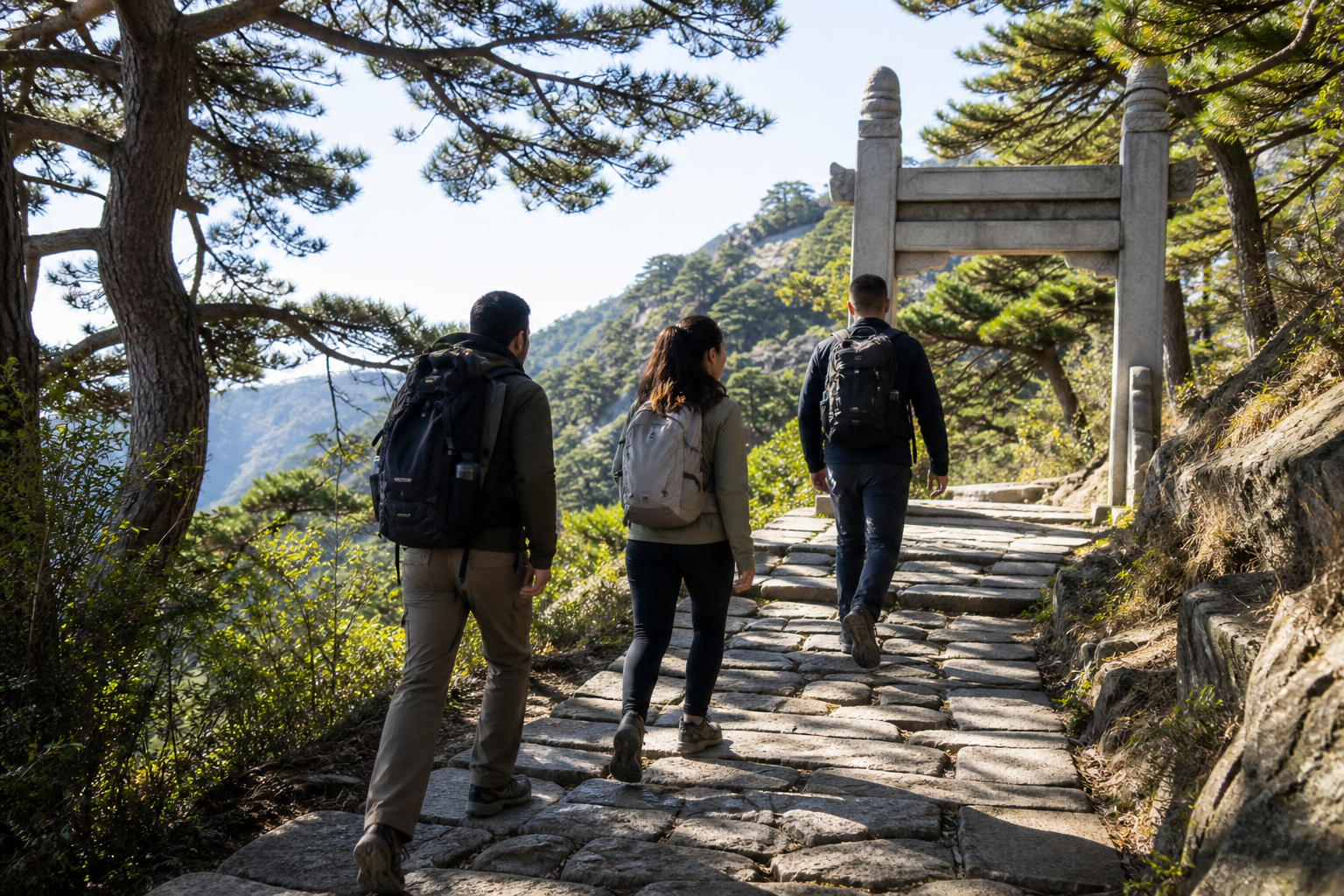
Mount Tai has many hiking and sightseeing routes, among which the traditional hiking routes are especially popular with tourists.
As you ascend the mountain path, you'll pass many historical buildings, stone carvings, and scenic views.
The Eighteen Bends section is a highly representative part of the Mount Tai climbing route. Its steep slopes and dense steps make it an important part of the climber's experience.
For hikers, a full ascent to the summit can be a challenging outdoor experience.
If you do not wish to undertake a long hike, you can also choose other modes of transportation and sightseeing depending on the opening conditions.
Taishan Stone Carvings
Another very important cultural feature of Mount Tai is its numerous cliff carvings.
The mountain cliffs and stone tablets preserve a large number of inscriptions from various dynasties, including calligraphy works, poems and historical texts.
These stone carvings not only possess calligraphic artistic value, but also record people's understanding and praise of Mount Tai in different historical periods.
During the climb, visitors can see many inscriptions and steles from different eras, which is what makes Mount Tai so unique compared to other natural mountain scenic areas.
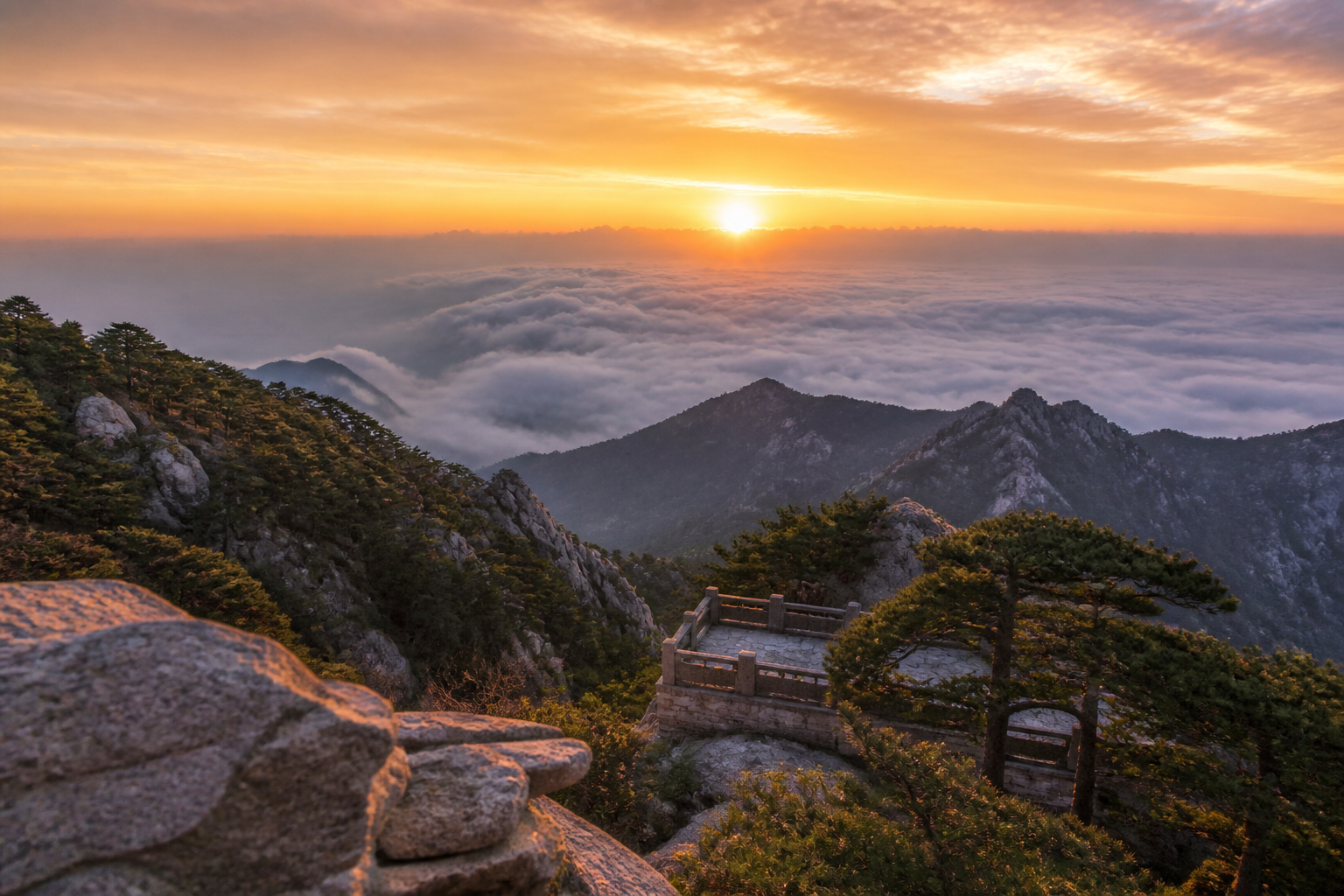
Sunrise: The most classic experience at Mount Tai
Watching the sunrise at Mount Tai is one of the most anticipated experiences for many tourists.
When the weather is right, standing on a mountaintop or other scenic spot in the early morning, you can see the sun slowly rising from the distant horizon, the sky gradually brightening, and the mountains and clouds displaying different colors.
The sunrise at Mount Tai has become a classic sight in China's mountain tourism.
If you plan to watch the sunrise, you need to know the weather and sunrise time in advance and prepare appropriate clothing according to the season.
Taishan scenery in all four seasons
Mount Tai offers different scenery in each of the four seasons.
In spring , mountain plants gradually come back to life, and the temperature is suitable for hiking.
In summer , the forests are dense and the mountains are relatively cool, but it is still necessary to pay attention to changes in mountain weather.
Autumn is a great season for hiking and photography, as the weather is usually quite comfortable and the mountains and forests are full of color.
In winter , Mount Tai may have the opportunity to see rime ice, snow and other landscapes, and under special weather conditions, one can enjoy unique winter mountain scenery.
Why is it worth visiting Mount Tai?
Mount Tai is suitable for tourists who enjoy natural scenery, history and culture, and outdoor travel.
Here you can:
- Climbing to the top of China's famous Five Sacred Mountains
- Enjoy the magnificent mountain scenery
- Experience traditional mountain climbing routes
- Visit ancient buildings and temples
- Appreciating cliff carvings from various dynasties
- Understanding the Fengshan Culture in Ancient China
- Enjoy the spectacular sunrise over Mount Tai when the weather is right.
For foreign tourists, the greatest charm of Mount Tai lies in its combination of natural landscapes and traditional Chinese culture.
Exploring Chinese Mountain Culture
Mount Tai has existed in the cultural memory of the Chinese people for thousands of years.
From the ancient emperors' Fengshan ceremony to the poems and stone carvings of scholars throughout history, and to today's tourists' mountain climbing trips, Mount Tai has always been a very important mountain in Chinese culture.
Climbing Mount Tai is not just an ordinary mountain climbing activity, but also a way to learn about traditional Chinese mountain culture.
For foreign tourists exploring China's history and natural landscapes for the first time, Mount Tai is a classic destination where they can experience both magnificent natural scenery and profound Chinese culture.