Dunhuang Mogao Grottoes: Exploring Ancient Chinese Buddhist Art and Silk Road Culture
The Mogao Caves in Dunhuang, Gansu Province, are one of China's most famous ancient grotto art sites and a highly representative World Heritage Site on the Silk Road.
The Mogao Caves preserve a wealth of ancient caves, murals, and painted sculptures, documenting cultural exchanges between different civilizations in ancient and medieval China and along the Silk Road. For foreign tourists, the Mogao Caves are not only a historical site but also a natural museum for understanding Chinese Buddhist art, ancient painting, and the history of the Silk Road.
Where are the Mogao Caves?
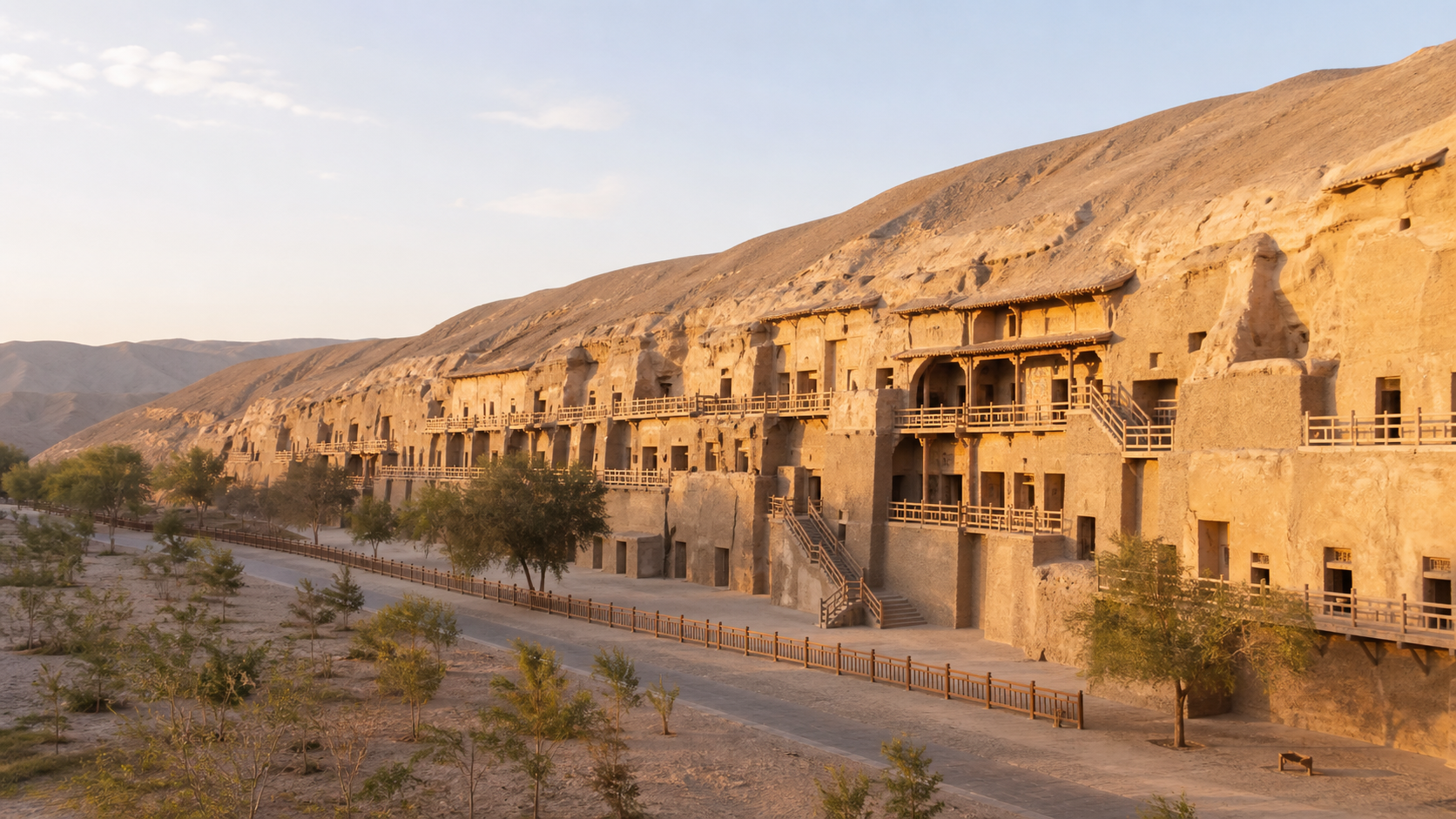
The Mogao Caves are located in the southeast of Dunhuang City, Gansu Province, on the cliff face at the eastern foot of the Mingsha Mountain.
Dunhuang is located in northwestern China and has historically been an important transportation hub connecting inland China with Central Asia, South Asia and even further regions.
Due to its unique geographical location, Dunhuang was once a hub for many merchants, monks, and travelers from different regions, making it an important center for cultural exchange along the Silk Road.
Today, visitors to Dunhuang can not only visit the Mogao Grottoes, but also explore the history of the ancient Silk Road by combining it with attractions such as the Mingsha Mountain and Crescent Lake, Yumen Pass and Yangguan Pass.
The long history of Mogao Caves
The Mogao Caves were first built in the 4th century AD, and were subsequently carved and expanded by several dynasties.
Over the centuries, people have carved out numerous caves in the cliff face and painted murals and sculpted Buddha statues inside them.
Artworks from different historical periods show significant changes in style, figure design, clothing, and painting techniques.
These changes have also become important materials for the study of ancient Chinese art, religion, and social culture.
Spectacular cave art
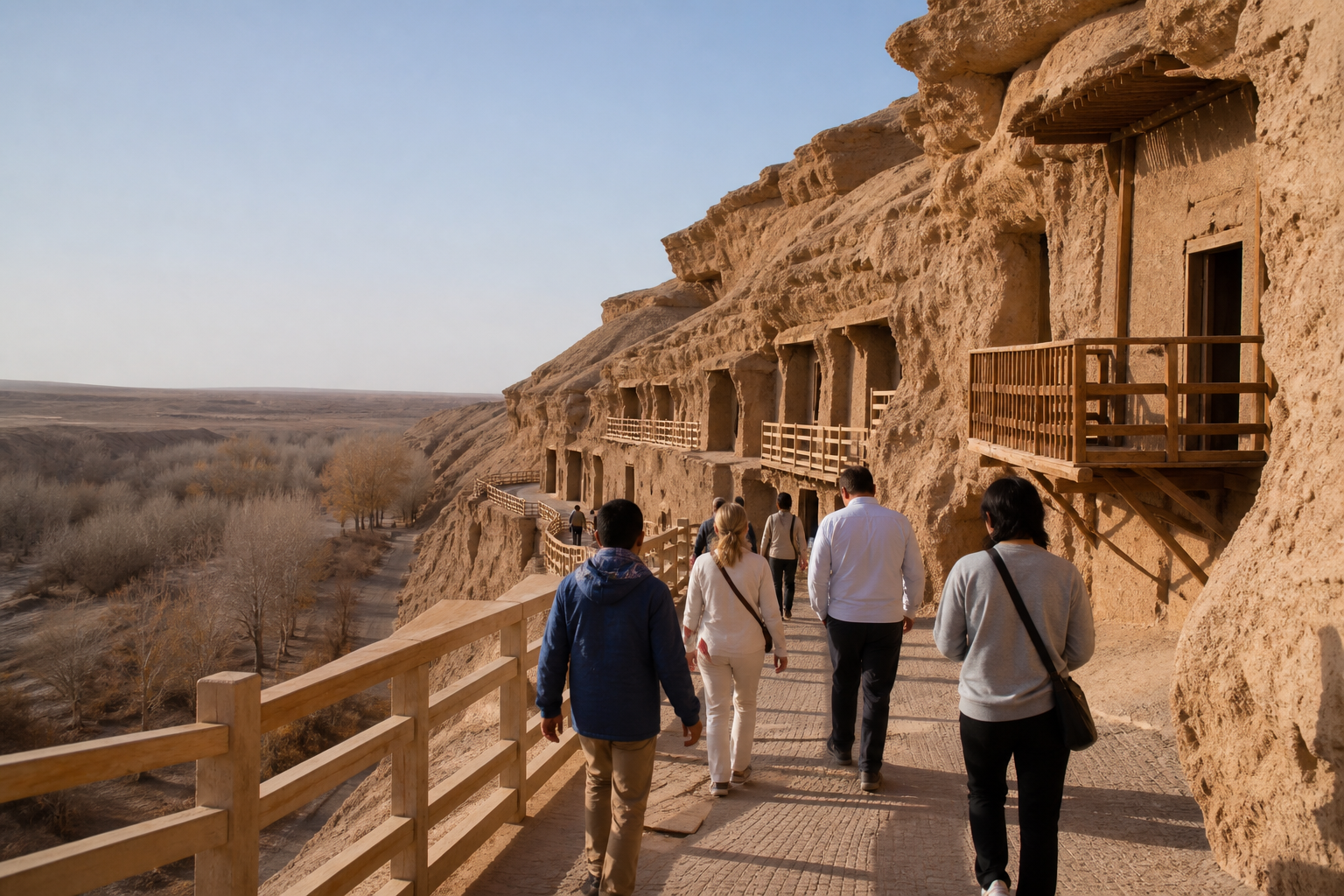
The most famous cultural heritage of Mogao Grottoes includes caves, murals, and painted sculptures.
The murals inside the cave are very rich in content, depicting Buddhist stories, figures, flying apsaras, architecture, animals, and scenes of ancient social life.
Some of these murals are brightly colored and have complex compositions, showcasing the superb painting skills of ancient artists.
Painted sculptures are also an important part of the Mogao Grottoes. The Buddha statues and figures in different caves have distinct characteristics of their respective eras, allowing visitors to directly experience the development of ancient Chinese Buddhist art.
The Silk Road in the murals
The significance of the Mogao Grottoes lies not only in Buddhist art itself.
Dunhuang was once an important city on the Silk Road, so the Mogao Grottoes murals also contain a lot of content related to ancient exchanges between China and foreign countries.
The murals depict various costumes, architecture, musical instruments, and human figures. These artworks reflect the long-standing cultural exchanges between ancient China and Central Asia, South Asia, and other regions.
For foreign tourists, the Mogao Caves have thus become an important window into understanding the ancient Silk Road.
The Library Cave and Dunhuang Manuscripts
Another very important historical discovery at Mogao Caves is the famous Library Cave.
In the early 20th century, a cave was discovered in Mogao Grottoes that contained a large number of ancient documents and works of art. The documents cover various fields such as religion, history, literature, language, and social life.
These Dunhuang documents are of great value for the study of Chinese history and cultural exchanges along the ancient Silk Road.
Today, Dunhuang studies has become an important field of international academic research, with scholars from all over the world studying the documents, art, and historical materials left behind in Dunhuang.
World Cultural Heritage
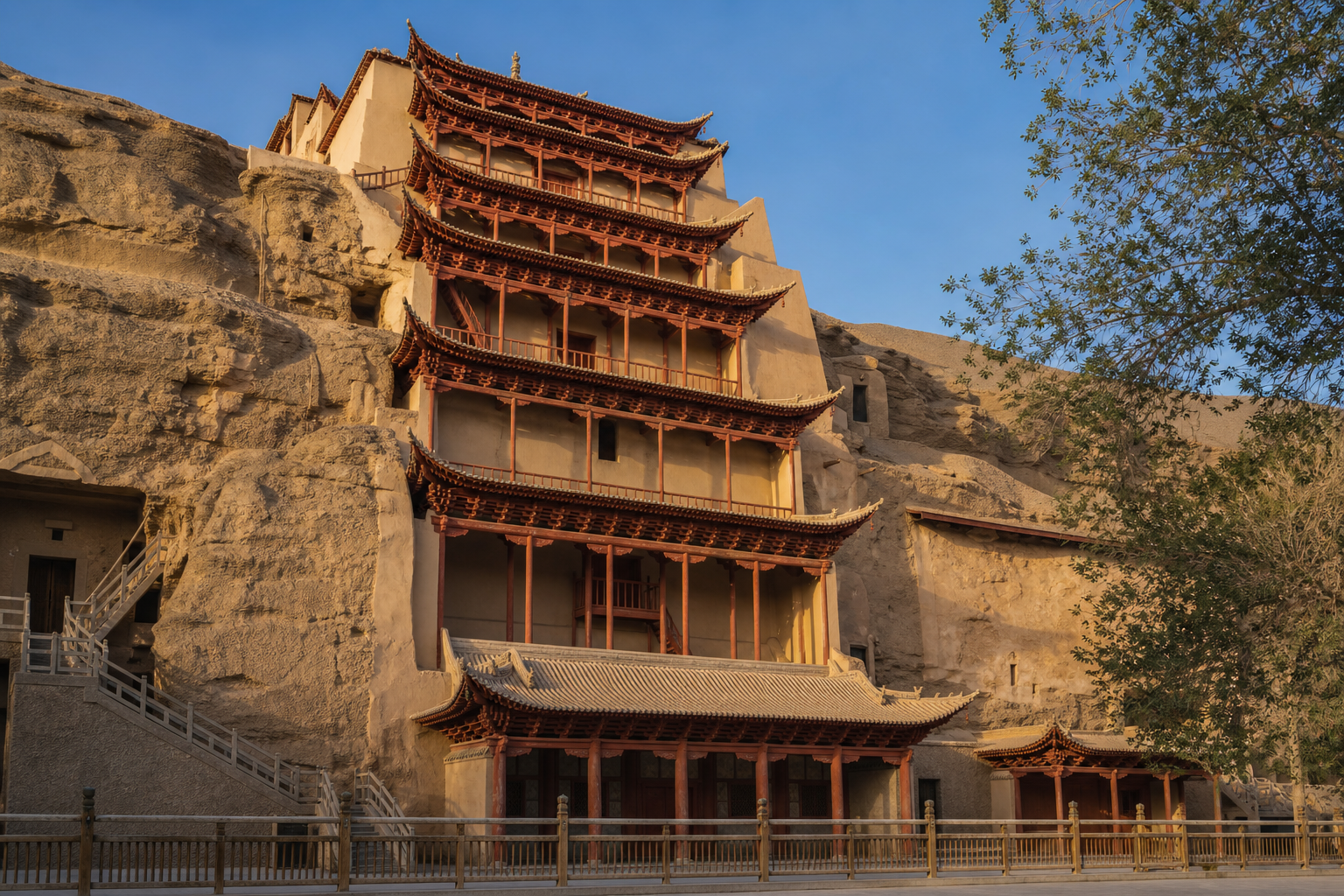
The Mogao Caves were listed as a World Heritage Site by UNESCO in 1987.
It is considered an important representative of ancient Chinese Buddhist art and one of the world's most historically and artistically valuable grotto sites.
The murals and painted sculptures preserved in the Mogao Grottoes provide extremely valuable materials for the study of ancient Chinese religious art and cultural exchanges along the Silk Road.
Dunhuang and the Silk Road
Dunhuang's charm extends far beyond the Mogao Caves.
This city was once located on an important transportation route of the ancient Silk Road, where people from different regions stopped, traded, and exchanged ideas.
Today, when visiting Dunhuang, tourists can also go to historical sites such as Mingsha Mountain and Crescent Lake, Yumen Pass and Yangguan Pass to learn about ancient trade routes and frontier culture.
If you have enough time, combining these attractions will allow you to experience Dunhuang's historical significance on the Silk Road more fully.
What should you be aware of when visiting the Mogao Grottoes?
The Mogao Caves are an important cultural heritage site, and therefore require high standards of cultural relic protection.
Visitors must abide by the scenic area's regulations, refrain from touching murals and painted sculptures, and avoid using equipment or engaging in activities that may damage the cultural relics.
Since the conditions for visiting the caves and the number of open caves may be adjusted according to the needs of cultural relic protection, visitors planning to visit are advised to check the latest opening information and reservation requirements of the scenic area in advance.
Why is it worth visiting the Mogao Grottoes?
For foreign tourists, the Mogao Caves have multiple attractions.
Here you can:
- Appreciating Ancient Chinese Mural Art
- Understanding the Development of Buddhist Art in China
- Observing cultural exchanges along the ancient Silk Road
- Appreciate the exquisite ancient painted sculptures
- Learn about the history of Dunhuang documents and the Library Cave.
- Exploring the important position of Dunhuang on the Silk Road
- Experience the unique history and natural environment of Northwest China
The Mogao Caves are especially suitable for visitors interested in history, art, religious culture, and the Silk Road.
Stepping into the Thousand-Year-Old Dunhuang
The Mogao Caves in Dunhuang are a place that connects the past and the present.
Standing in Dunhuang today, one can still see the Gobi Desert and the vast landscape of Northwest China. Yet, within the caves of Mogao Grottoes, murals and painted sculptures dating back hundreds or even thousands of years are preserved.
These artworks span a long historical period and bear witness to the exchanges between different cultures along the Silk Road.
For foreign tourists who wish to gain a deeper understanding of Chinese history and ancient civilization, the Mogao Caves in Dunhuang are not only a World Heritage Site, but also a window into understanding ancient Chinese art and the civilization of the Silk Road.