
Fujian Tulou: Discover China’s Unique Circular Villages and Rich Hakka Culture
Fujian Tulou are distinctive traditional architectural styles found in southeastern China and are among Fujian's most representative cultural and tourist attractions. They are mainly distributed in Zhangzhou and Longyan cities of Fujian Province, and are renowned for their unique circular, square, and other architectural forms.
These large earthen buildings not only possess unique architectural aesthetics but also embody the history, lifestyle, and traditional culture of the Hakka people. For foreign tourists, Fujian Tulou is a unique destination offering an in-depth understanding of traditional Chinese architecture and rural culture.
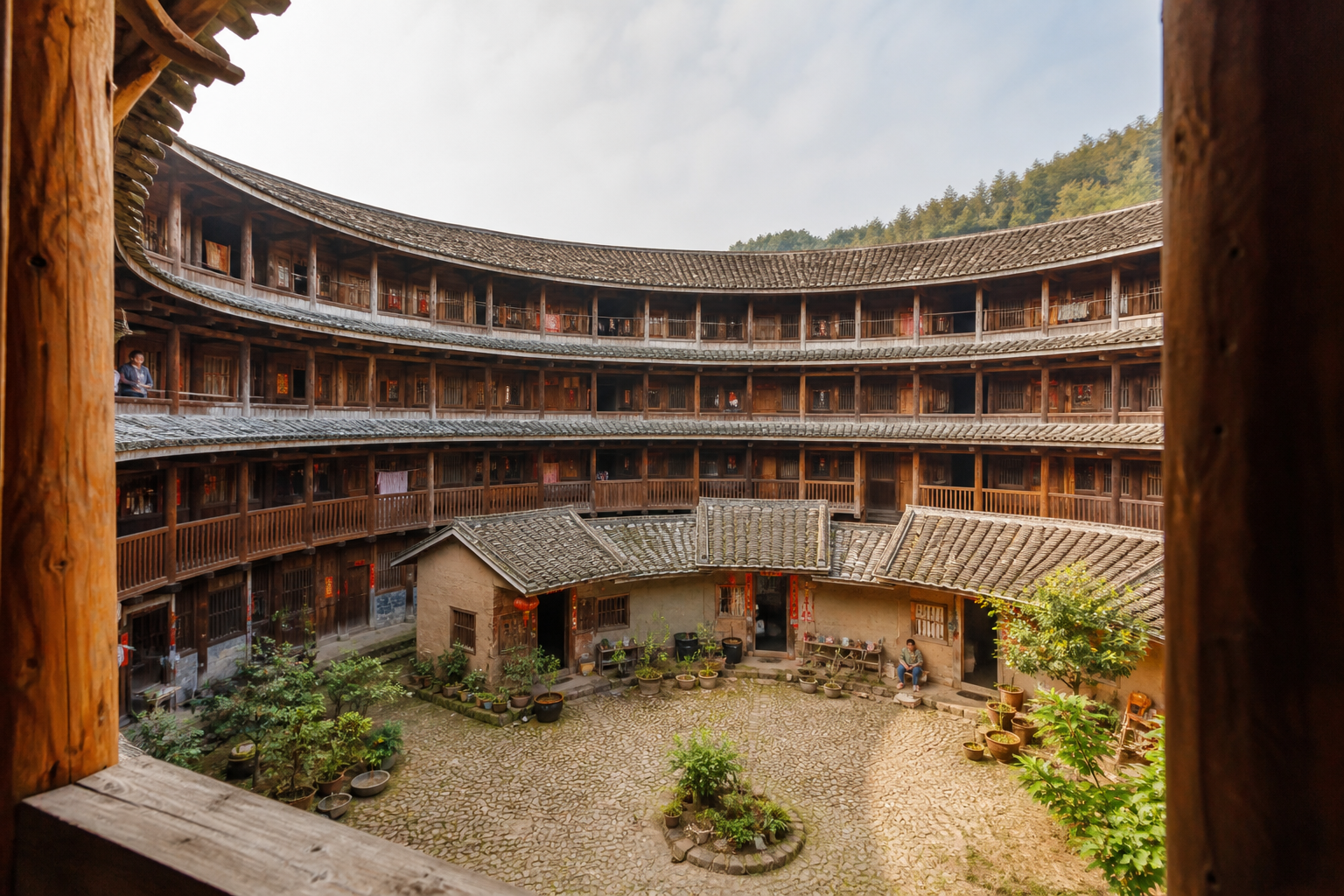
Where are the Fujian Tulou (earthen buildings) located?
Fujian Tulou are mainly distributed in the mountainous areas of southwestern Fujian, with the more famous Tulou clusters located in Zhangzhou and Longyan.
Here, rolling hills and dense forests abound, with many earthen buildings nestled among valleys, streams, and traditional villages. These earthen buildings blend seamlessly with the surrounding natural environment, creating a rural landscape that is distinctly characteristic of Fujian.
Starting from major cities in Fujian such as Fuzhou and Xiamen, tourists can visit different Tulou scenic spots according to specific routes.
What are Fujian Tulou?
Fujian Tulou is a type of large traditional dwelling built primarily with rammed earth.
Unlike ordinary dwellings, a Tulou (earthen building) often has a huge building scale, which can accommodate multiple families to live together. The exterior walls are thick and sturdy, and the interior is laid out around a central courtyard.
Tulou (earthen buildings) commonly come in various shapes, including round, square, and oval, with round and square buildings being the most famous.
From a distance, the massive earthen buildings resemble ancient castles hidden among the mountains and forests. This unique architectural style is also an important reason why Fujian Tulou attracts foreign tourists.
Unique round earthen buildings
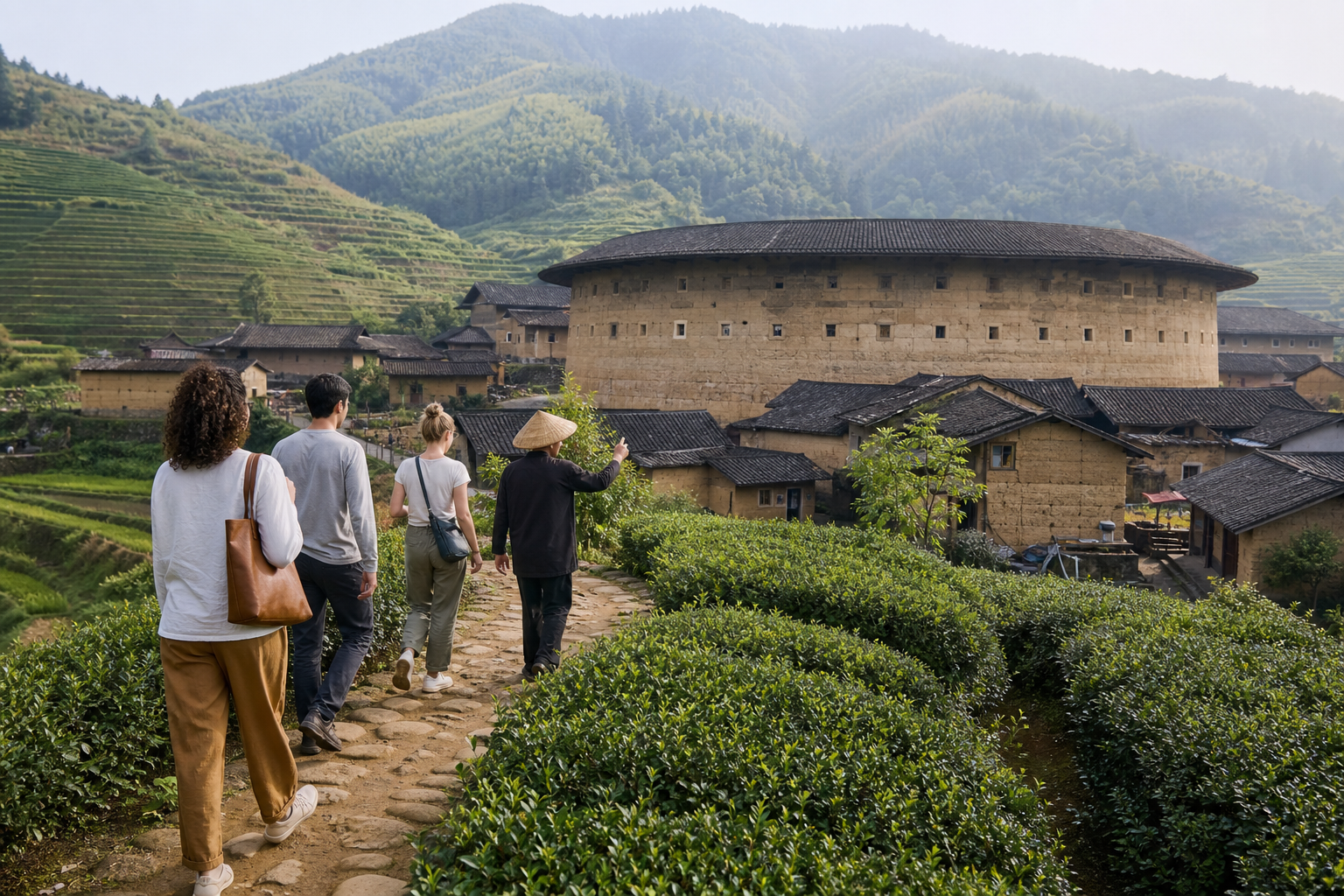
The round earthen building is one of the most representative architectural forms of Fujian earthen buildings.
The circular exterior walls typically do not have many windows that open to the outside, while the interior of the building forms a multi-layered structure around a central courtyard.
This layout not only makes full use of the limited space, but also reflects the traditional architectural considerations of safety, living, and family cohabitation.
From a high vantage point, the round earthen buildings stand in stark contrast to the surrounding green mountains and forests, creating a unique landscape in rural Fujian.
Hakka people's traditional life
Fujian Tulou (earthen buildings) are closely related to Hakka culture.
Historically, some Hakka people migrated to the mountainous areas of Fujian and gradually formed villages and lifestyles with local characteristics. Tulou (earthen buildings) are not only living spaces, but also important places for families to live together, communicate, and hold traditional activities.
A large earthen building often contains rooms, kitchens, common areas and other living facilities for multiple families.
Therefore, Tulou is not only a type of architecture, but also a manifestation of a traditional community lifestyle.
The architectural wisdom of Fujian Tulou
The construction methods of Fujian Tulou embody the wisdom of traditional Chinese architecture.
The thick rammed earth walls help maintain a relatively stable indoor temperature and provide good protection. The interior of the building is laid out around a central courtyard, which can form a relatively complete living space.
Tulou are usually built along the mountainside, integrating with the local terrain and natural environment.
For modern tourists, what is most impressive is not just the appearance of the Tulou, but how the ancient inhabitants used local materials and traditional techniques to build such a large-scale structure.
World Cultural Heritage
Fujian Tulou (earthen buildings) have significant historical, architectural, and cultural value.
The representative architectural complex of Fujian Tulou was listed as a UNESCO World Heritage Site in 2008.
The World Heritage sites include representative Tulou buildings and traditional villages in Nanjing and Yongding, Fujian Province.
These earthen buildings showcase the long-standing architectural traditions of the local residents and reflect the relationship between people and the natural environment.
Therefore, for foreign tourists, Fujian Tulou is not only a tourist attraction, but also an important window into understanding China's traditional architecture and cultural heritage.
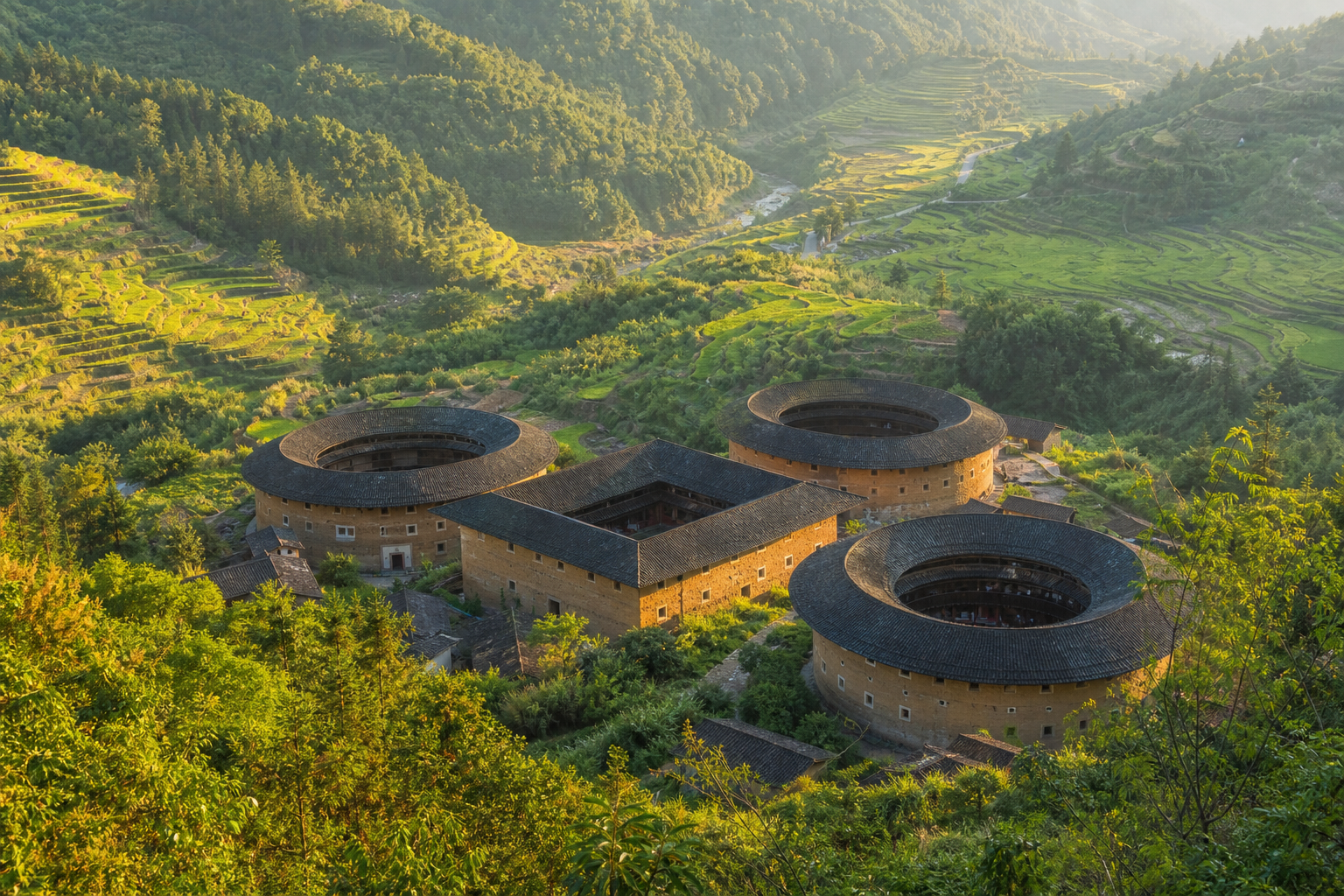
Nanjing Tulou and Yongding Tulou
Fujian has several famous Tulou tourist destinations, among which the Nanjing Tulou and Yongding Tulou are particularly popular with tourists.
Nanjing Tulou boasts a rich collection of Tulou architecture and traditional village landscapes, with the Tianluokeng Tulou Cluster being a particularly famous example.
Yongding boasts a large number of historically significant Hakka earthen buildings, some of which are large in scale and well-preserved.
Tulou buildings in different regions have their own unique architectural styles and village environments, and tourists can choose the appropriate destination according to their travel routes.
Natural scenery around Fujian Tulou
Fujian Tulou are not isolated structures.
Many Tulou (earthen buildings) are nestled among mountains and traditional villages, surrounded by tea gardens, forests, terraced fields, streams, and farmland.
In spring and summer, the mountain plants are vibrant with color, and the villages are surrounded by greenery; in autumn and winter, one can experience a more tranquil rural landscape.
For photography enthusiasts, the Tulou (earthen buildings) are especially worth photographing at dawn and dusk. The soft light, combined with the surrounding mountains, forests, and villages, creates scenes that are very characteristic of rural China.
What kind of tourists are suitable for visiting Fujian Tulou?
Fujian Tulou is suitable for tourists interested in Chinese history, architecture, traditional culture and rural life.
Here you can:
- Appreciate the unique round and square earthen buildings
- Learn about the traditional lifestyle of the Hakka people
- Exploring the Wisdom of Traditional Chinese Architecture
- Visiting World Cultural Heritage
- Enjoy the natural scenery of the Fujian mountains
- Experience traditional villages with local characteristics
- Enjoy local Hakka cuisine
If tourists have already visited historical and cultural cities in China such as Beijing and Xi'an, then the Fujian Tulou can offer a completely different travel experience.
Exploring Architectural Wonders in Rural China
The greatest charm of Fujian Tulou lies in its integration of architecture, history, culture and natural environment.
These massive earthen buildings, nestled in the mountains and forests, have preserved their unique architectural forms over hundreds of years. Stepping inside, visitors can not only appreciate the architecture itself but also gain insight into the lifestyles of traditional Chinese families and communities within the traditional courtyard and village environment.
For foreign tourists who wish to explore Chinese culture in depth, the Fujian Tulou is a very worthwhile destination.
From the magnificent Tulou architecture to the tranquil mountain village scenery and the long-standing Hakka culture, Fujian Tulou showcases a unique and charming aspect of traditional Chinese architecture and rural culture.