
Qianling Mausoleum: The Imperial Tombs of the Tang Dynasty and the Mausoleum of Empress Wu Zetian
Qianling Mausoleum, located in Qianxian County, Xianyang City, Shaanxi Province, China, is an important royal mausoleum of the Tang Dynasty and the only mausoleum in Chinese history to house two emperors simultaneously. It is the final resting place of Emperor Gaozong of Tang, Li Zhi, and Wu Zetian, the only woman in Chinese history to formally ascend the throne.
Built against the mountain, Qianling Mausoleum is surrounded by a large number of Tang Dynasty stone carvings, tomb passage remains, and ancient architectural sites, making it an important tourist destination for understanding the Tang Dynasty's royal mausoleum system, history, culture, and stone carving art.
For overseas tourists traveling to Xi'an, Qianling Mausoleum is also an important attraction for learning about the history of the Tang Dynasty and the legendary life of Empress Wu Zetian.
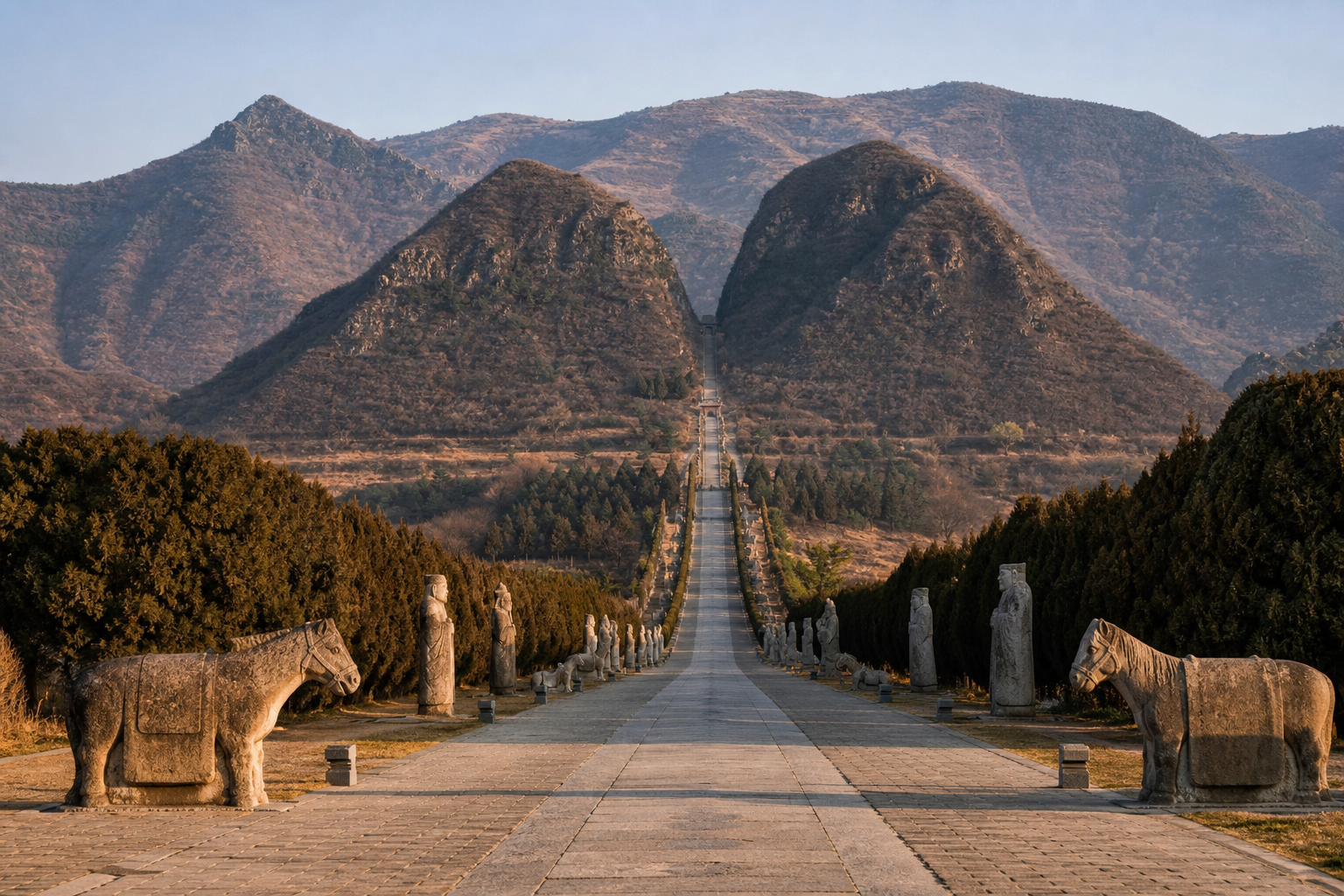
Where is Qianling Mausoleum?
Qianling Mausoleum is located on Liangshan Mountain in the northern part of Qianxian County, Xianyang City, Shaanxi Province, about 80 kilometers away from Xi'an City.
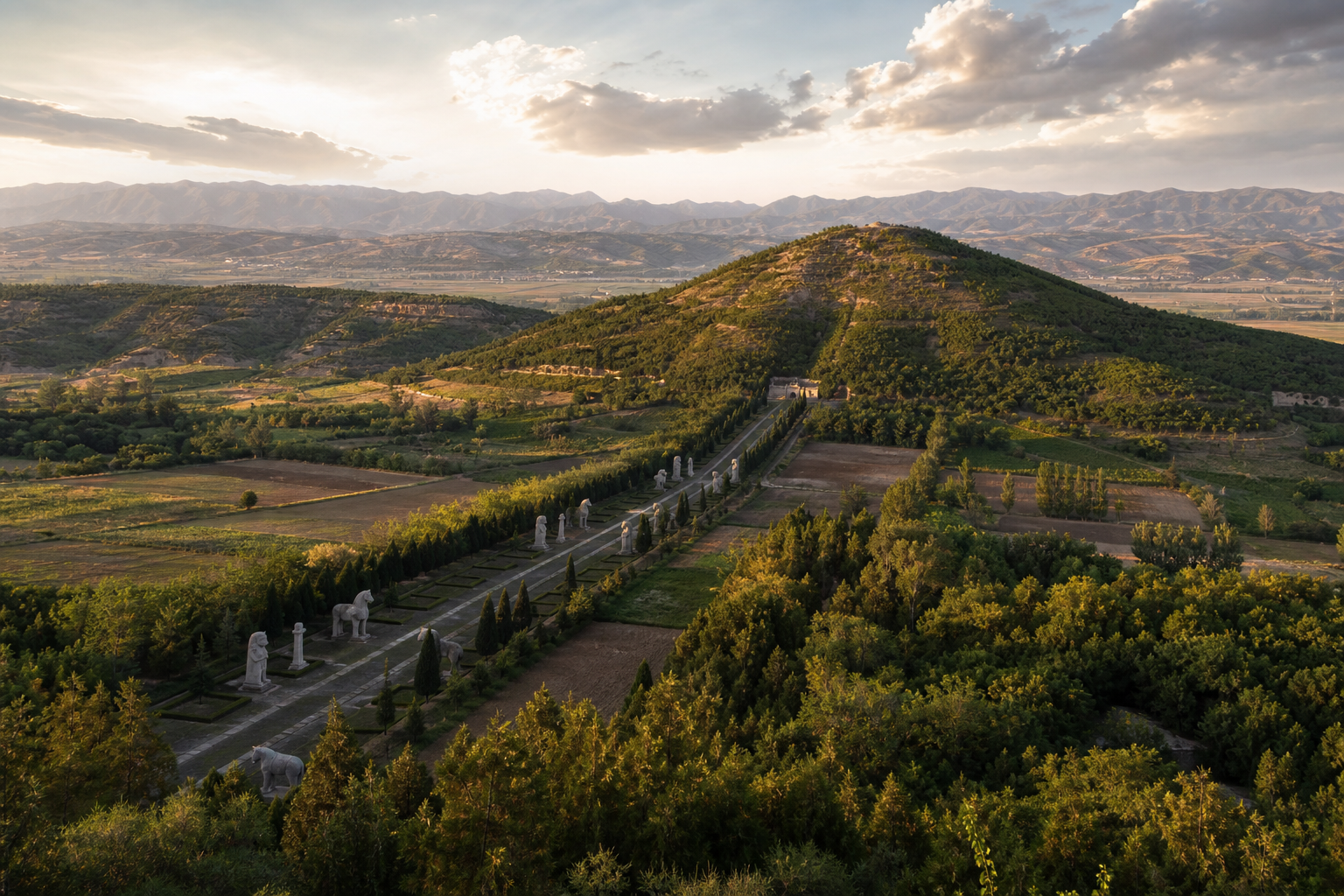
The Qianling Mausoleum is located in the western part of the Guanzhong Plain, surrounded by mountains and open natural landscapes. The mausoleum was built in accordance with the ancient Chinese tradition of "building a mausoleum in the mountains," utilizing the natural terrain of Liangshan Mountain to form a unique layout for a royal mausoleum.
Qianling Mausoleum can be visited in conjunction with other historical sites from the Tang Dynasty in Xi'an, such as Daming Palace National Heritage Park and Shaanxi History Museum.
The history of Qianling
The Qianling Mausoleum was first built during the reign of Emperor Gaozong of Tang, Li Zhi.
Emperor Gaozong of Tang was the third emperor of the Tang Dynasty. During his reign, the Tang Dynasty continued to expand its territory and national strength. After his death in 683 AD, Emperor Gaozong was buried in the Qianling Mausoleum.
Later, Wu Zetian became the only female emperor in Chinese history to officially ascend the throne. After her death in 705, she was buried with Emperor Gaozong of Tang in the Qianling Mausoleum.
Therefore, Qianling Mausoleum is a very special royal mausoleum in Chinese history—two emperors are buried in one mausoleum.
Emperor Gaozong of Tang and Empress Wu Zetian
One of the most distinctive historical features of Qianling Mausoleum is its close association with two emperors, Emperor Gaozong and Empress Wu Zetian.
During the reign of Emperor Gaozong of Tang, the Tang Dynasty continued to develop in politics, economy and culture, and maintained extensive exchanges with other parts of Asia.
Wu Zetian is one of the most legendary rulers in Chinese history. She gradually gained political power from being the empress of Emperor Gaozong of Tang, and officially ascended the throne in 690, establishing the Wu Zhou regime.
During her reign, Wu Zetian continued to promote centralized power and attached great importance to talent selection and national governance.
In 705, Wu Zetian abdicated, and the Tang Dynasty was restored. After her death, she was buried with Emperor Gaozong of Tang in the Qianling Mausoleum.
Qianling Mausoleum has thus become an important place for understanding the political history of the Tang Dynasty and the history of Wu Zetian.
Royal tombs built against the mountain
One of the most unique architectural features of Qianling Mausoleum is that it was built according to the natural terrain of the mountain.
Liangshan Mountain consists of three peaks, with the main peak located in the center and the two peaks on either side forming a symmetrical layout. The mausoleum utilizes the mountain as a natural barrier, reflecting the Tang Dynasty's architectural philosophy of "building mausoleums according to the mountain's contours."
Compared to tombs built entirely on flat ground, Qianling Mausoleum is more closely integrated with the surrounding mountains.
This design not only reflects the ancient Chinese mausoleum system, but also the Chinese traditional culture's emphasis on the natural environment and landscape.
Qianling Stone Carvings
Qianling Mausoleum preserves a large number of Tang Dynasty stone carvings, which are one of the most important cultural heritages in the scenic area.
Upon entering the mausoleum area, visitors can see stone carvings distributed along both sides of the spirit path, including stone figures, stone horses, and other sculptures that symbolize the royal mausoleum.
These stone carvings not only have artistic value, but also reflect the ritual system and architectural layout of the Tang Dynasty imperial tombs.
The Tang Dynasty was an important period for the development of ancient Chinese stone carving art, and the stone carvings at Qianling Mausoleum have high historical and artistic research value.
The Stele Without Words
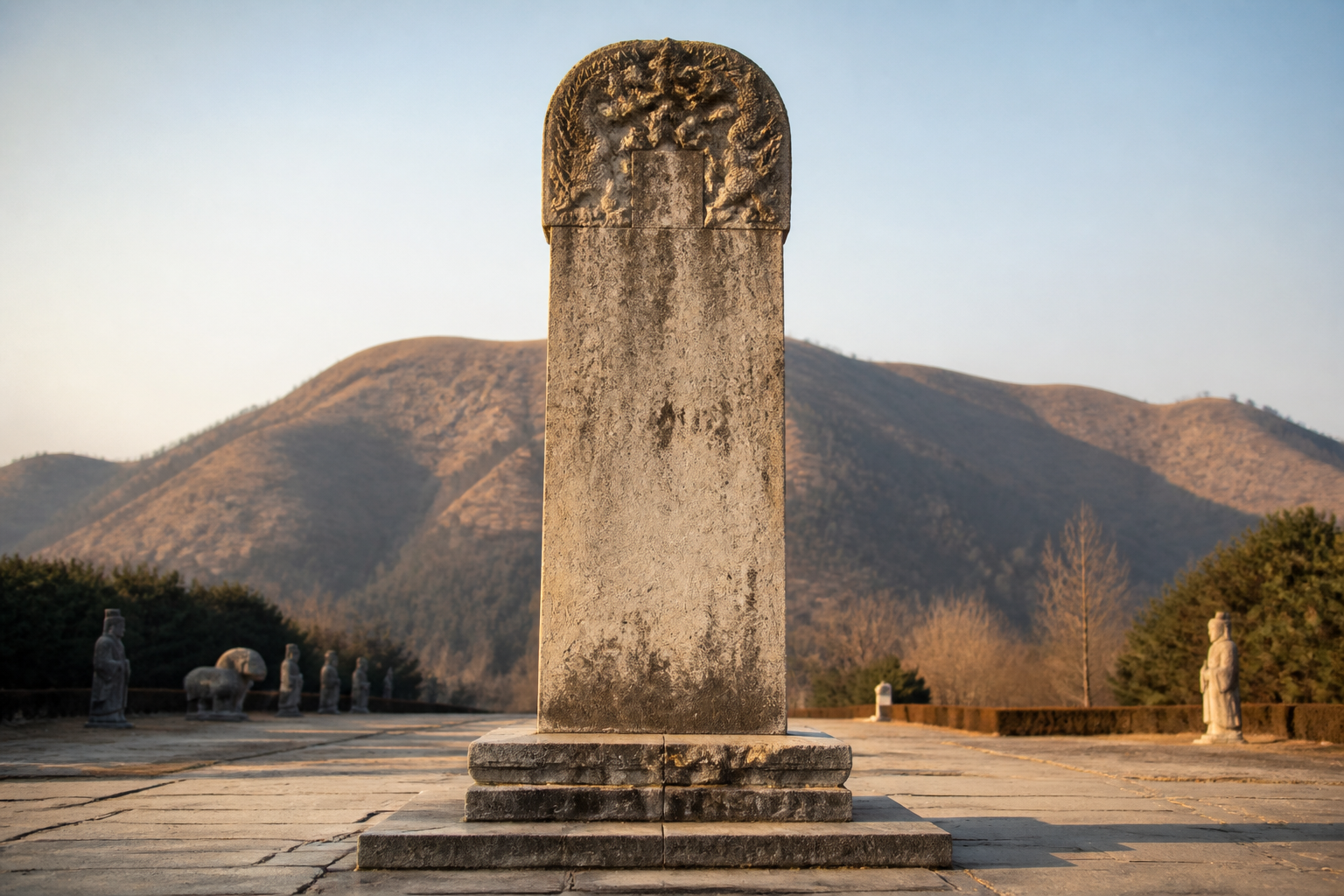
The stele without inscription is one of the most famous cultural relics in Qianling Mausoleum.
This stone tablet is tall and heavy, and it has no inscription in the traditional sense, so it is called the "Wordless Tablet".
The stele without inscription is located near the Sacred Way of Qianling Mausoleum and is a very representative historical site of Qianling.
There are several historical explanations for why Wu Zetian did not leave any inscription on the stele. Some believe that Wu Zetian wanted future generations to evaluate her merits and demerits, while others believe that the inscription was not carved in the traditional way.
Today, the stele without inscription has become one of the most popular cultural attractions at Qianling Mausoleum.
Shushengji Stele
The Qianling Mausoleum also preserves the famous Shushengji Stele.
This stone tablet is related to Emperor Gaozong of Tang. The inscription mainly records Emperor Gaozong's achievements and related historical content.
In stark contrast to the wordless stele, the Shushengji Stele contains a large amount of text, and the two steles together demonstrate different forms of stele culture in Tang Dynasty royal tombs.
When visiting Qianling Mausoleum, visitors can learn more about the ritual system and historical culture of the Tang Dynasty royal mausoleums through these stone tablets.
Why was Qianling Mausoleum not fully excavated?
Unlike many ancient mausoleums, the main underground palace of Qianling Mausoleum has not yet undergone formal and comprehensive archaeological excavation.
Qianling Mausoleum has been the site of numerous attempts to plunder it throughout history, but the main structure of the mausoleum remains in relatively good condition.
Currently, tourists mainly visit the Qianling Mausoleum's surface ruins, spirit path, stone carvings, and surrounding burial tombs, rather than entering the underground tombs of Emperor Gaozong and Empress Wu Zetian.
This also preserves much of the historical mystery surrounding Qianling Mausoleum.
Burial tombs around Qianling Mausoleum
The Qianling Mausoleum area is quite large, and there are also many accompanying tombs of members of the Tang Dynasty royal family and important figures scattered around it.
These tombs have yielded murals, pottery figurines, gold and silver artifacts, and other Tang Dynasty relics, providing important materials for the study of Tang Dynasty court life, clothing, art, and social culture.
Some of the tombs have been excavated and protected, and related historical information is displayed to tourists.
Qianling Mausoleum and Tang Dynasty Culture
Qianling Mausoleum is not only a royal tomb, but also an important window into understanding Tang Dynasty culture.
The Tang Dynasty was a period of very active cultural exchange in Chinese history. As the capital at the time, Chang'an attracted envoys, merchants, monks, and travelers from different parts of Asia.
The imperial architecture, stone carvings, and mausoleum system embodied in Qianling Mausoleum also reflect the political system and cultural characteristics of Tang Dynasty society.
By visiting Qianling Mausoleum, overseas tourists can gain a deeper understanding of the Tang Dynasty imperial family, the ancient Chinese funeral system, and Tang Dynasty art.
When is the best time to visit Qianling Mausoleum?
Qianling Mausoleum is suitable for visiting in all four seasons.
Springtime weather is quite comfortable, and the scenery around the mausoleum area is refreshing, making it suitable for a walk.
Summer weather in Shaanxi is quite hot, so it is recommended to visit during the cooler morning or afternoon hours and take precautions against sunburn.
Autumn is a relatively comfortable season, making it a good time to visit Qianling Mausoleum.
There are relatively fewer tourists in winter, making the mausoleum area quieter and more suitable for visitors interested in history and archaeology.
If starting from Xi'an, you can combine Qianling Mausoleum with other historical and cultural sites in western Guanzhong such as Famen Temple to form a Tang Dynasty-themed tourist route.