
Daming Palace National Heritage Park: Exploring the Royal Palace Ruins of Chang'an during the Tang Dynasty
Daming Palace National Heritage Park is located in Xi'an, Shaanxi Province, China, and is one of the most important historical sites of Chang'an, the capital of the Tang Dynasty. Daming Palace was built during the Tang Dynasty and served as the royal palace where the Tang emperors lived, handled government affairs, and held important ceremonies. It was also the political center of Chang'an at that time.
Today, Daming Palace is no longer a complete palace, but a heritage park that has been excavated and protected. Visitors can learn about Tang Dynasty royal architecture, ancient city planning, and the important position of Chang'an, the capital of the Tang Dynasty, in Chinese history.
For overseas tourists visiting Xi'an for the first time, Daming Palace is an important attraction for understanding Tang Dynasty China and ancient Chang'an.
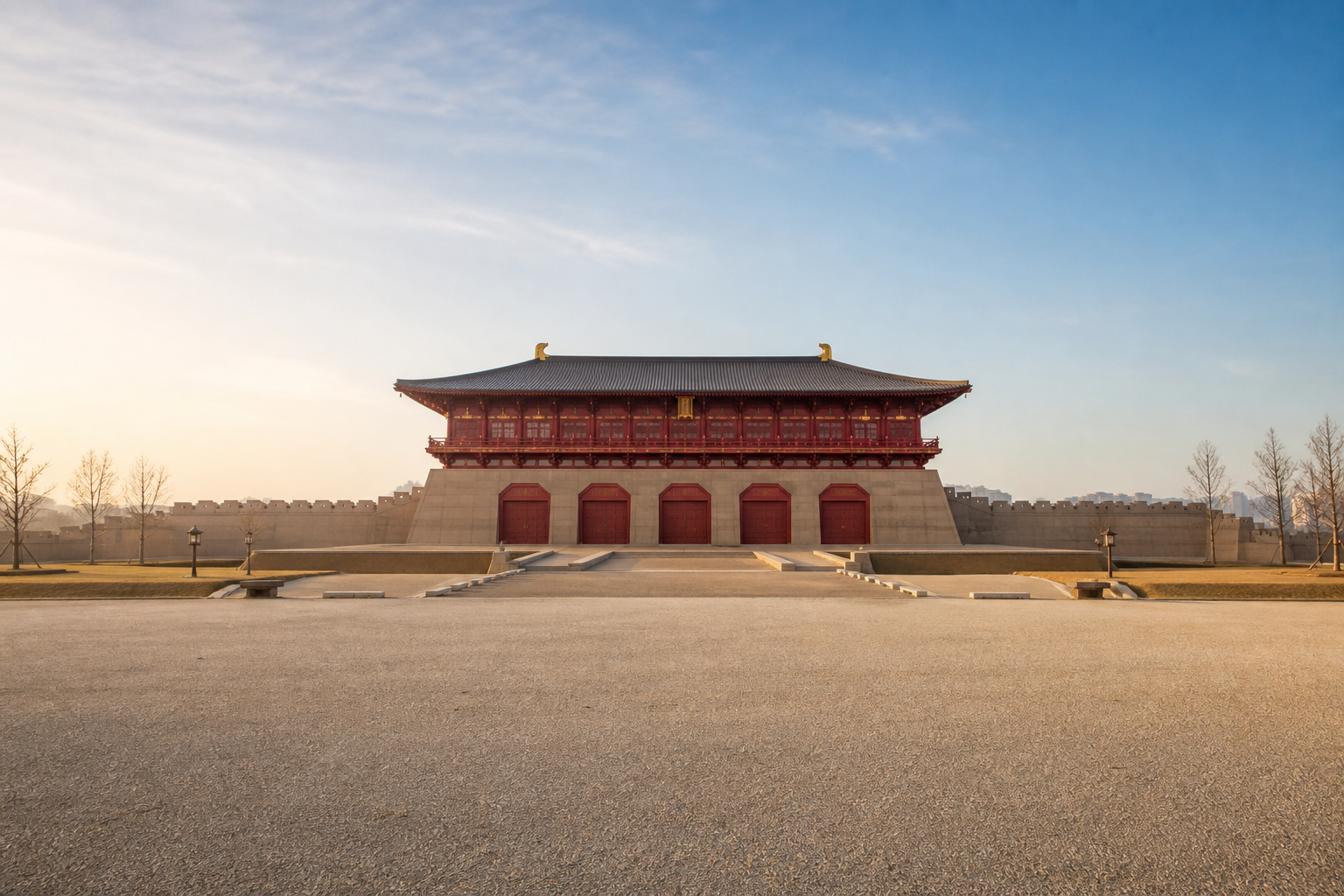
The history of Daming Palace
Daming Palace was first built in the 7th century during the Tang Dynasty and gradually developed into one of the most important imperial palaces of the Tang Dynasty.
The Tang Dynasty was one of the most prosperous periods in Chinese history, and its capital, Chang'an, was one of the largest and most internationally influential cities in the world at the time. Merchants, envoys, and travelers from Central Asia, West Asia, South Asia, and other parts of East Asia visited Chang'an.
Daming Palace, located in the northern part of Chang'an, the capital of the Tang Dynasty, was an important place for the emperor to handle state affairs. Many important political activities and royal ceremonies were held here.
The history of Daming Palace also reflects the development of politics, culture and foreign exchanges during the Tang Dynasty.
How big was the Daming Palace?
The Daming Palace in history was very large, covering an area of approximately 3.2 square kilometers.
The palace area consists of multiple palace gates, palaces, courtyards, and pavilions, forming a grand royal architectural complex.
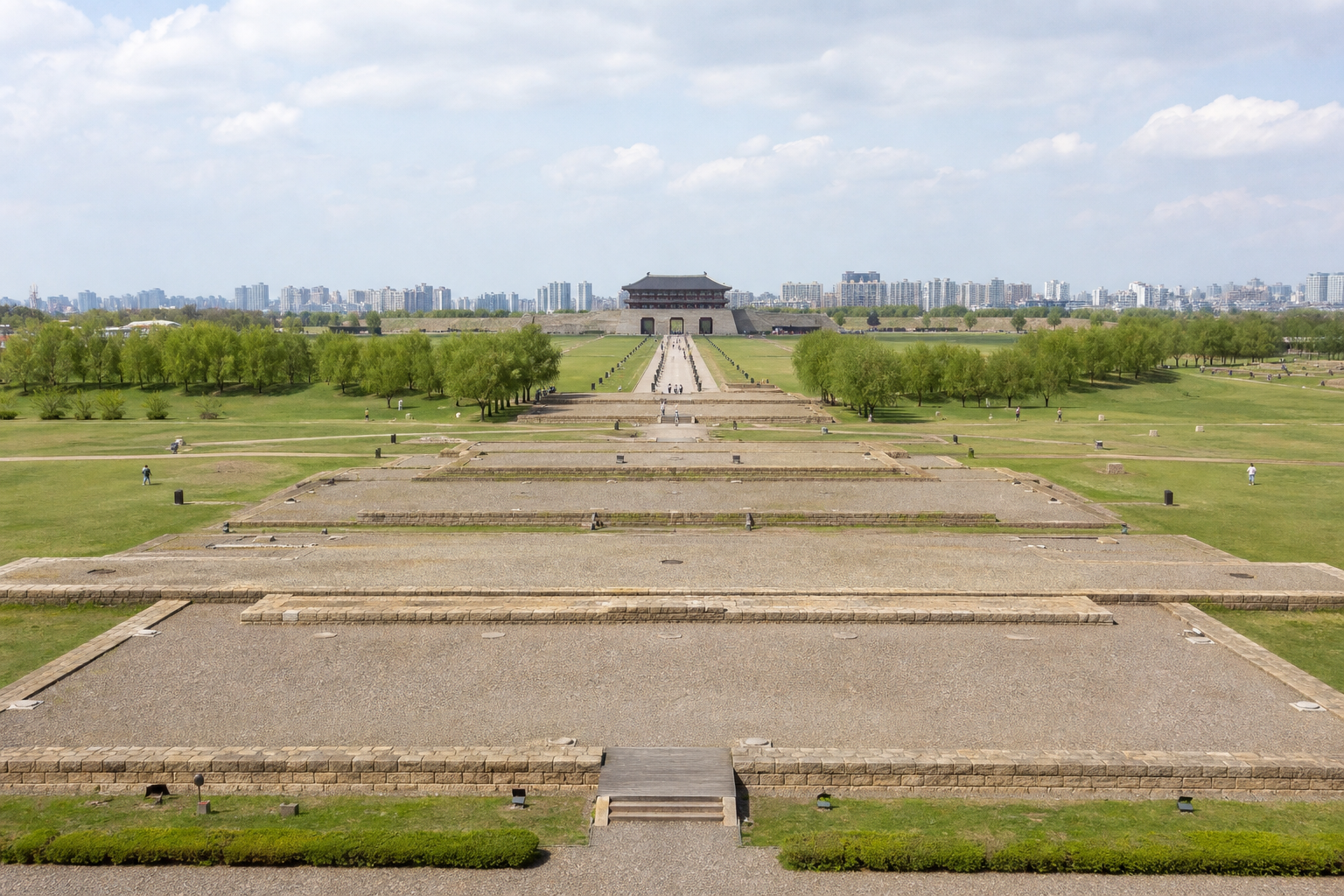
The architectural layout of Daming Palace reflects the characteristics of ancient Chinese palace architecture, which emphasizes a central axis, hierarchy, and order. The palace is distributed from south to north, with different areas serving different political and residential functions.
Although visitors today cannot see the complete Tang Dynasty palace, they can learn about the overall layout of the palace city through the ruins, archaeological displays, and modern site protection facilities.
Danfeng Gate
Danfeng Gate is one of the most important gates of Daming Palace and a very representative landscape in the Daming Palace ruins.
Danfeng Gate, located in the southern part of Daming Palace, was an important entrance to the palace city. Historically, Danfeng Gate was grand in scale and had distinct royal architectural features.
Today, the Danfeng Gate site has been protected and displayed, and visitors can learn about the history of Daming Palace and the architectural style of the Tang Dynasty palace city through the site museum.
For foreign tourists, Danfeng Gate is also an important entrance to understanding the royal architecture and urban planning of the Tang Dynasty.
Hanyuan Hall Ruins
Hanyuan Hall was one of the most important palaces in Daming Palace and an important venue for large-scale court assemblies and state ceremonies during the Tang Dynasty.
Historically, Hanyuan Hall was built on a high platform and was very grand in scale. Envoys and officials from different regions once participated in important royal ceremonies here.
Today, the Hanyuan Hall building no longer exists, but the palace foundation and other remains can still be seen.
Standing in the ruins area, one can more intuitively understand the scale of the Tang Dynasty royal palace and also feel the important status of ancient Chang'an as the political center.
Chang'an City and Daming Palace of the Tang Dynasty
Daming Palace was not an isolated palace; it was an important part of the urban system of Chang'an, the capital of the Tang Dynasty.
Chang'an, the capital of the Tang Dynasty, boasted a well-organized urban plan, comprising the palace city, imperial city, residential areas, markets, and roads. The city's roads were planned according to a relatively regular pattern, reflecting the characteristics of ancient Chinese urban construction.
Daming Palace, located in the northern part of the city, was one of the most important political areas in Chang'an, the capital of the Tang Dynasty.
Today, the Daming Palace Ruins Park, together with historical sites such as the Xi'an City Wall and the Bell Tower, forms an important historical and cultural tourism route in Xi'an.
Daming Palace and the Silk Road
Chang'an during the Tang Dynasty was not only the political center of China, but also an important city on the ancient Silk Road.
At that time, Chang'an maintained close ties with many regions in Central Asia, West Asia, and East Asia. Envoys, merchants, monks, and travelers from different countries and regions came here, bringing with them diverse cultures, religions, arts, and goods.
Daming Palace, as the royal palace of the Tang Dynasty, is an important place to understand this historical period.
In 2014, the "Silk Roads: the Routes Network of Chang'an-Tianshan Corridor" was inscribed on the UNESCO World Heritage List. The Daming Palace Ruins are an important part of the Tang Dynasty Chang'an City Ruins in this World Heritage project.
What's happening at the Daming Palace Ruins Park today?
Today, the Daming Palace National Heritage Park is characterized by heritage preservation, historical display, and cultural tourism.
Visitors can tour important areas such as the Danfeng Gate Ruins and the Hanyuan Hall Ruins, and also learn about Tang Dynasty palace architecture, urban life, and archaeological discoveries through museums and exhibitions.
The park is quite large, and the areas of the ruins are far apart, so you can choose to focus on visiting different areas depending on the time available.
Unlike ancient cities or palaces that preserve their complete architecture, Daming Palace places greater emphasis on the protection of the historical site itself. The areas that visitors see may only be building foundations, ground remains, or site markers, but these remains can help us understand a Tang Dynasty royal palace that has disappeared.
When is the best time to visit Daming Palace?
Daming Palace is suitable for visiting in all four seasons.
Spring and autumn offer relatively comfortable weather, making them ideal for walking tours within the large archaeological park.
Xi'an is hot in summer, so it is recommended to visit in the morning or afternoon when it is cooler, and bring drinking water and sun protection products.
There are relatively fewer tourists in winter, making the archaeological park quieter and more suitable for history and archaeology enthusiasts to visit at a leisurely pace.
If you wish to learn about the history of Chang'an during the Tang Dynasty, you can combine the Daming Palace with attractions such as the Xi'an City Wall and the Shaanxi History Museum on the same trip to Xi'an.
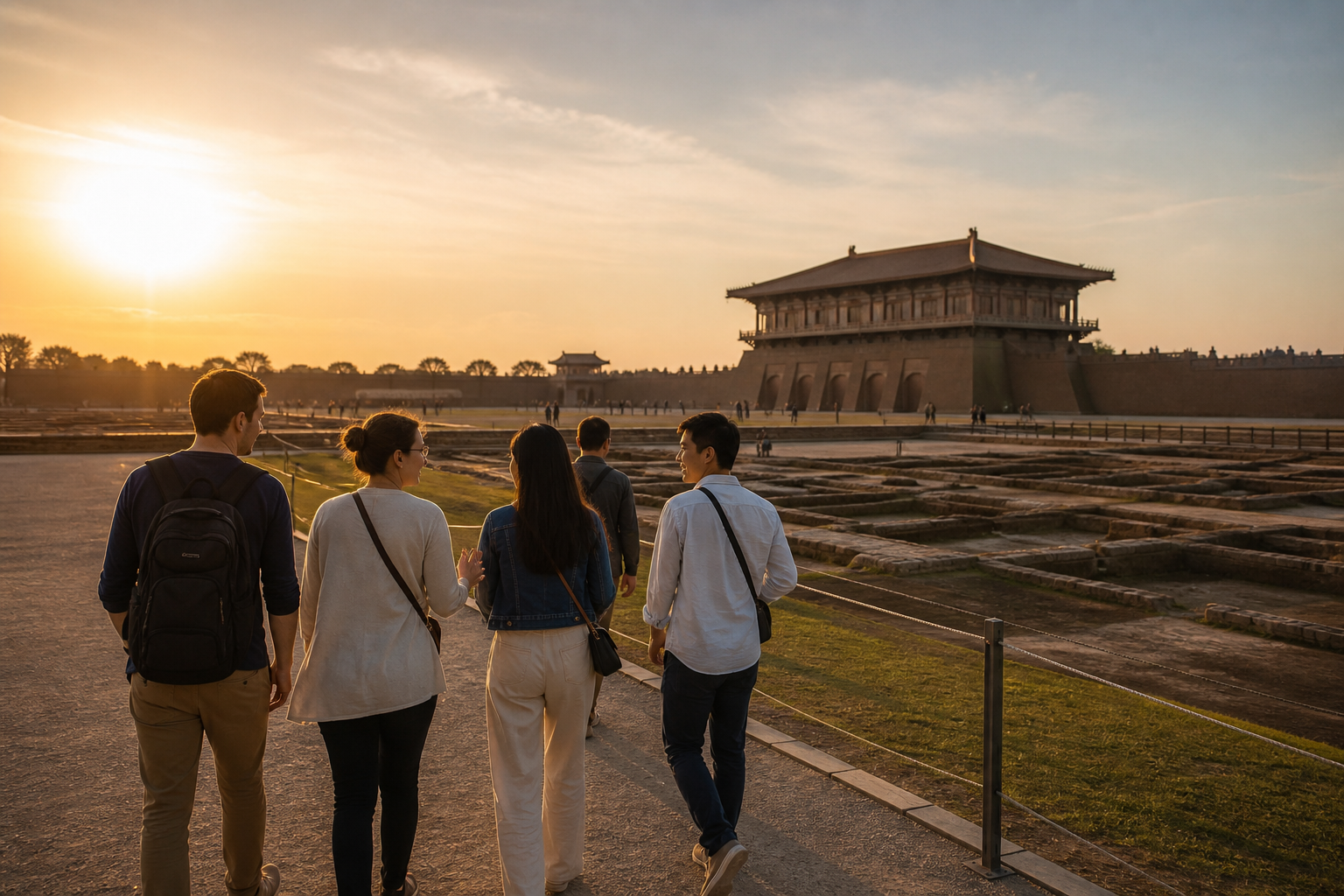
Why is Daming Palace worth visiting for foreign tourists?
The value of Daming Palace lies not only in the ruins themselves, but also in the Tang Dynasty China it represents.
This place was once an important palace for the Tang Dynasty emperors to handle state affairs, and it was also an important center of political and cultural life in Chang'an at that time.
For foreign tourists, Daming Palace can help them understand an era in Chinese history that had international influence, as well as the exchanges between Chang'an and the regions along the Silk Road at that time.
From the preserved palace ruins and city layout to archaeological displays, Daming Palace allows today's visitors to learn about a royal palace city from a thousand years ago, as well as the history of Chang'an, the ancient international metropolis of the Tang Dynasty.