
Sichuan Giant Pandas: China's National Treasure and a Unique Cultural Icon
Sichuan is one of the world's most important giant panda habitats and a major destination for overseas tourists to learn about and observe giant pandas. It boasts rich forest ecosystems and a suitable natural environment for giant pandas, and is home to several giant panda nature reserves and research bases.
The giant panda is one of China's most representative animals. Its black and white fur, round body, and unique lifestyle make it a beloved Chinese animal for tourists all over the world.
When traveling to Sichuan, in addition to enjoying the cityscape of Chengdu and the local cuisine, getting up close to giant pandas is also a very popular travel experience.

Where are giant pandas mainly distributed in Sichuan?
Sichuan is an important distribution area for giant pandas in China, with their main habitats concentrated in the mountainous forest areas of western and northern Sichuan Basin.
Chengdu is surrounded by several tourist destinations related to giant pandas, among which the Chengdu Research Base of Giant Panda Breeding is one of the more familiar places for overseas tourists to see giant pandas.
In addition, several nature reserves are located in northern and western Sichuan, providing important habitats for wild giant pandas.
Chengdu Research Base of Giant Panda Breeding
The Chengdu Research Base of Giant Panda Breeding is a highly representative giant panda tourism destination in Sichuan.
Located in northern Chengdu, the base focuses on giant panda conservation, breeding, scientific research, and public education. Visitors can observe the giant pandas' daily lives and learn about their diet, behavior, and breeding.
Early morning is usually the best time to observe giant pandas. Giant pandas like to eat bamboo and also rest after eating, so if you come to the base in the morning, you can see them eating, active, and in other different states.
The base also has an exhibition area for giant panda cubs, which is a major attraction for many visitors.
Giant panda's living habits
Giant pandas mainly eat bamboo and need to spend a considerable amount of time eating each day.
Although giant pandas belong to the order Carnivora, bamboo has become their primary food source. To obtain sufficient energy, giant pandas eat multiple times a day.
Giant pandas are generally gentle in nature and spend most of their time eating and resting. Young giant pandas are more active and often move around in areas such as trees and climbing frames.
Observing the living conditions of giant pandas can provide a more intuitive understanding of the natural habits of this rare animal.

Wolong National Nature Reserve
Wolong National Nature Reserve is located in Aba Tibetan and Qiang Autonomous Prefecture, Sichuan Province, and is one of China's important giant panda conservation areas.
This area boasts vast forests and abundant bamboo resources, providing a favorable habitat for giant pandas and other wild animals.
Wolong is also an important area for the protection and scientific research of giant pandas in China, and it is of great significance in the protection, breeding and field research of giant pandas.
Besides giant pandas, Wolong region also boasts abundant wild flora and fauna resources, making it an important natural ecotourism destination in Sichuan.
Giant pandas and the natural environment of Sichuan
The habitat of giant pandas in Sichuan is mainly distributed in mountainous forest areas.
The climate, vegetation, and water resources here are suitable for bamboo growth, providing a stable food source for giant pandas.
Sichuan's mountainous environment also boasts rich biodiversity, with giant pandas and other wild animals living together in a complete forest ecosystem.
Therefore, giant pandas are not only an important tourism resource in Sichuan, but also an important part of the local natural ecological environment.
Sichuan Giant Panda Habitat World Heritage Site
The Sichuan Giant Panda Habitat has significant ecological and conservation value.
In 2006, the “Sichuan Giant Panda Habitat – Wolong, Siguniang Mountain and Jiajin Mountain Range” was inscribed on the UNESCO World Natural Heritage List.
This World Heritage area boasts abundant forest, mountain, and wildlife resources, and is one of the world's most important temperate forest ecosystems.
Giant pandas are the most representative species in this region, which has made the Sichuan Giant Panda Sanctuaries well-known internationally.
When is the best time to see giant pandas?
Giant pandas can be seen year-round.
If you want to see the giant pandas more active, you can choose to visit the relevant base in the morning. Compared to noon and afternoon, giant pandas are usually more likely to eat and move around in the morning.
Sichuan experiences significant climate changes throughout the year, so when traveling to the areas surrounding Chengdu and mountainous regions, it's advisable to prepare appropriate clothing based on the season.
Combining giant panda viewing with a trip to Chengdu allows you to experience Sichuan's traditional culture, cuisine, and city life at the same time.
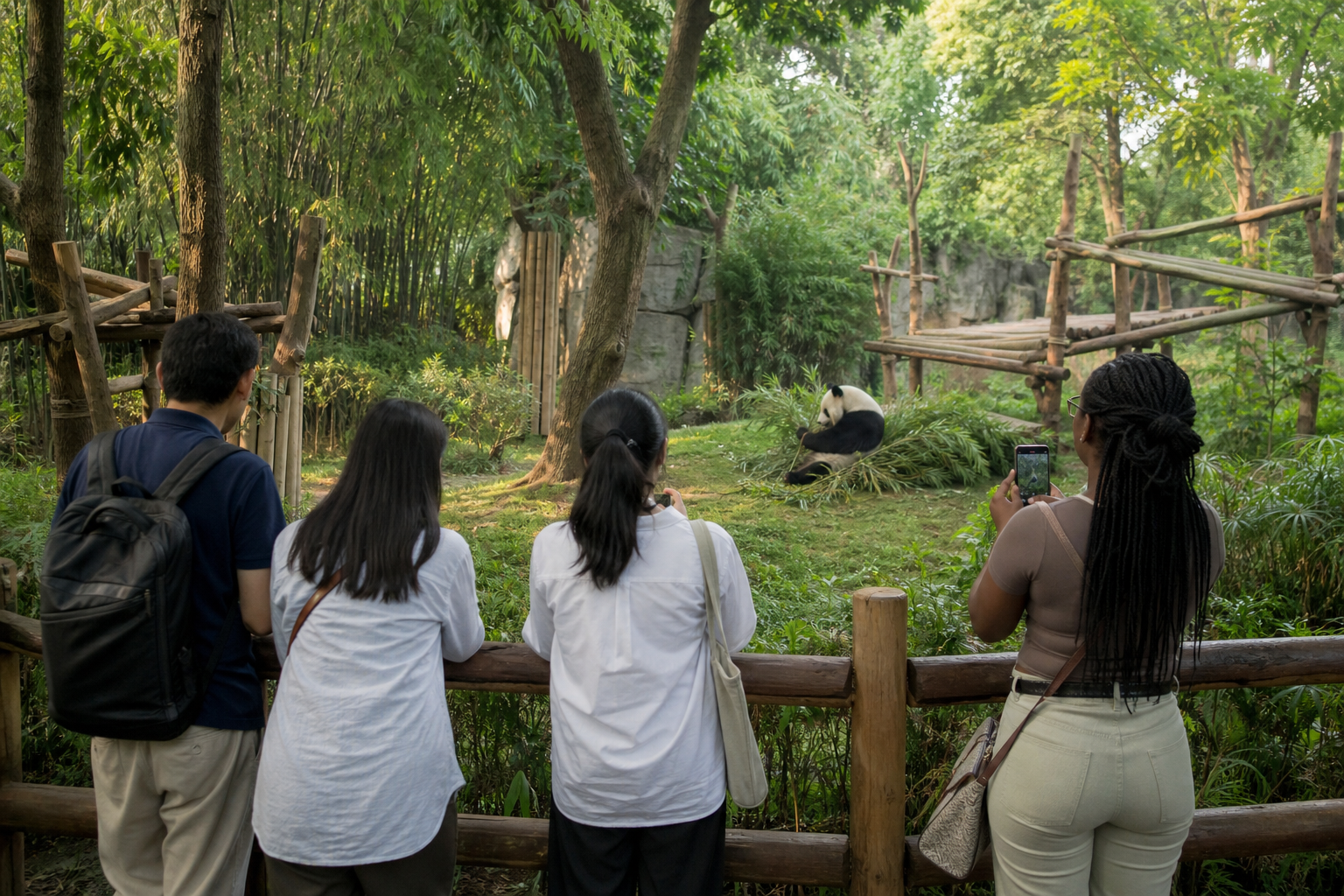
Sichuan Giant Panda Tourism Experience
For overseas tourists, a trip to Sichuan to see giant pandas is not only an animal viewing experience, but also an important way to understand China's nature conservation and ecological culture.
From the Chengdu Research Base of Giant Panda Breeding to important giant panda habitats such as Wolong, visitors can learn about the giant panda's living environment, conservation efforts, and Sichuan's rich natural ecology from different perspectives.
Giant pandas have become one of the most internationally renowned natural and cultural symbols of Sichuan and even China, and are also an important reason for many overseas tourists to travel to Sichuan.