
Zhangjiajie: China's magnificent mountains and unique natural landscapes
Zhangjiajie, located in northwestern Hunan Province, is a renowned mountain tourism destination in China, famous for its unique quartz sandstone peaks, canyons, forests, and cloud and mist landscapes. It boasts numerous towering peaks of varying shapes, shrouded in mist and clouds, creating a highly distinctive natural landscape.
Zhangjiajie's rich geological features and forest ecosystems make it an important natural tourism destination in China. The floating mountain landscape in the movie "Avatar" also drew visual inspiration from Zhangjiajie's unique peak forest landscape, further enhancing Zhangjiajie's popularity among overseas tourists.
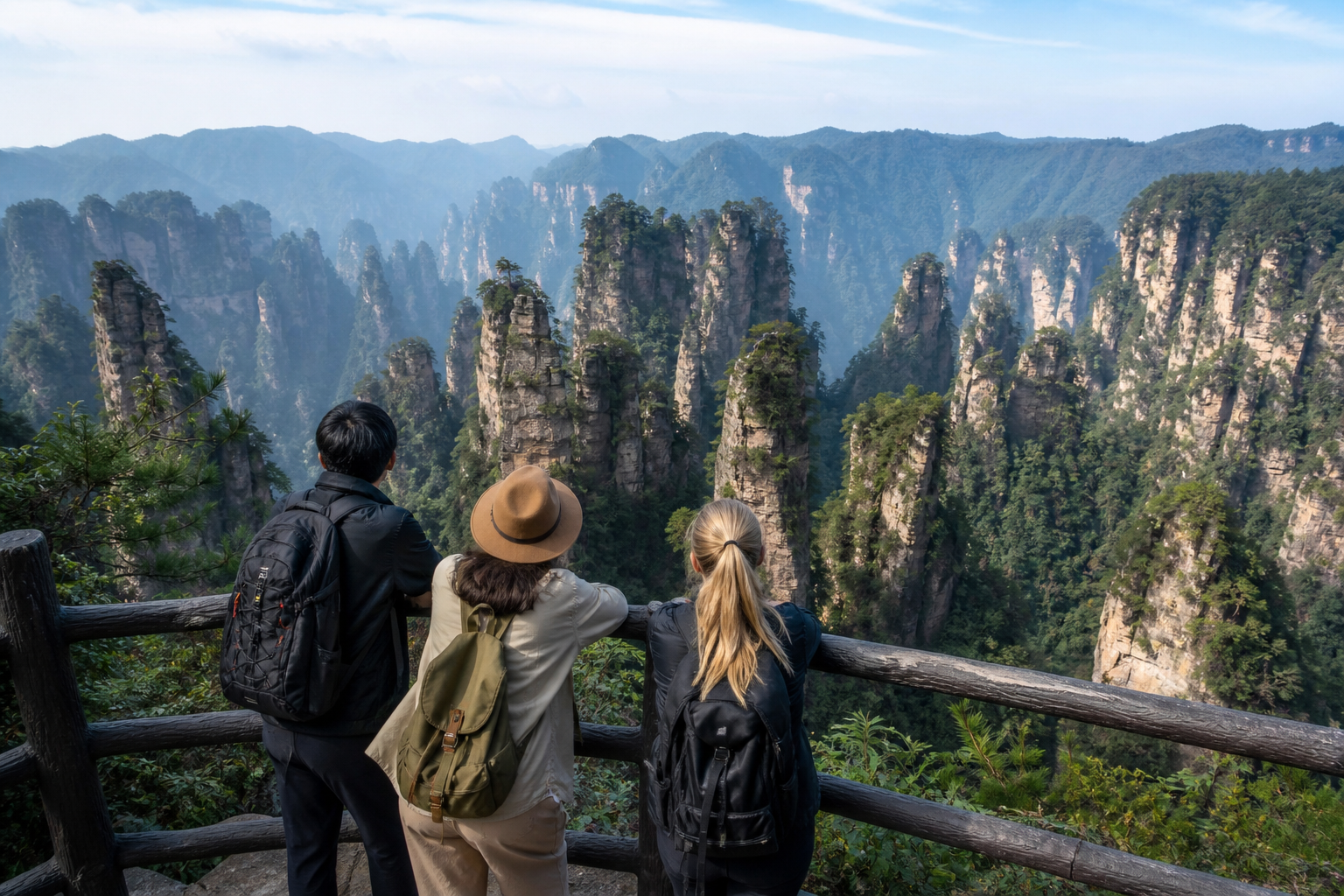
Where is Zhangjiajie?
Zhangjiajie is located in northwestern Hunan Province. Its main tourist areas include Zhangjiajie National Forest Park, Tianmen Mountain National Forest Park, and the Grand Canyon.
Zhangjiajie National Forest Park is an important part of the Wulingyuan Scenic Area, boasting a large number of quartz sandstone peak forests. In 1992, the Wulingyuan Scenic Area was listed as a UNESCO World Natural Heritage Site.
Zhangjiajie City is easily accessible from major cities in Hunan, such as Changsha, making it one of Hunan's important tourist destinations.
Zhangjiajie National Forest Park
Zhangjiajie National Forest Park is one of the most representative tourist attractions in Zhangjiajie.
This area features thousands of quartz sandstone peaks of various shapes, some of which soar into the clouds and are covered with lush trees.
Valleys, streams, and forests are scattered among the peaks, and the entire mountain forest presents different scenery as the weather and light change.
For first-time visitors to Zhangjiajie, Zhangjiajie National Forest Park is an important scenic spot for understanding the unique peak forest landform of the area.
Yuanjiajie
Yuanjiajie is one of the most famous scenic spots in Zhangjiajie, known for its towering peaks and canyon landscapes.
This area boasts many uniquely shaped peaks, among which the Qiankun Pillar is a highly representative landscape.
The peaks rise abruptly from the valley, appearing and disappearing in the misty weather, creating a visually striking mountain landscape.
Yuanjiajie is also a key area for many tourists visiting Zhangjiajie.
Tianzi Mountain
Tianzi Mountain is located in the northern part of the Wulingyuan Scenic Area and is famous for its spectacular peak forests, sea of clouds, and sunrise views.
Looking down from the mountain, one can see numerous peaks scattered among the valleys. On a clear day, the distant mountains appear layered upon layered; on a foggy day, the peaks seem to float in a sea of clouds.
Tianzi Mountain boasts unique scenery in each of the four seasons, making it a favorite area for photography enthusiasts.
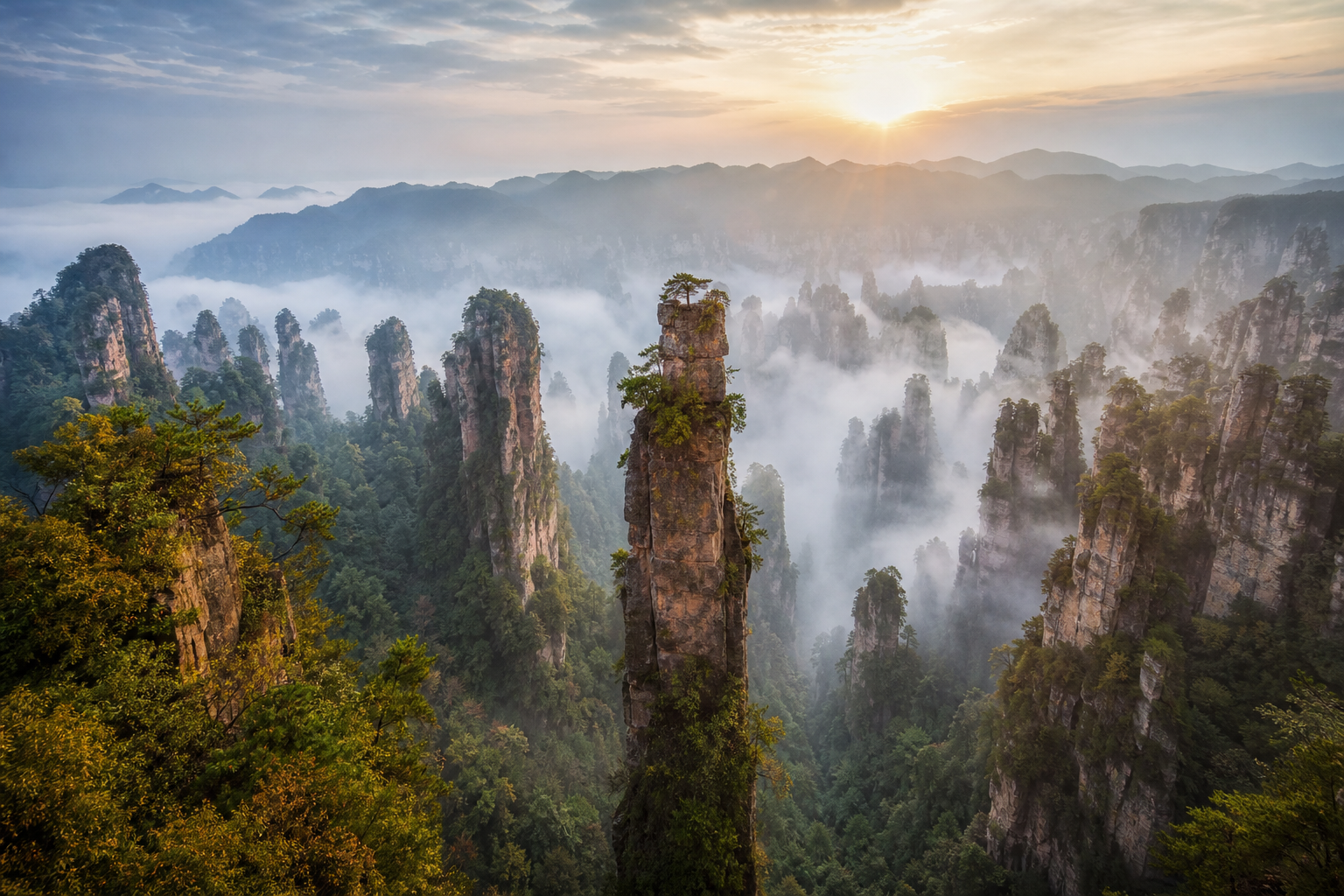
Golden Whip Stream
Jinbian Stream is a stream that flows through Zhangjiajie National Forest Park.
The stream flows slowly along the canyon, flanked by towering peaks and dense forests.
The trails along Jinbian Stream are relatively gentle, making them ideal for hiking. Visitors can stroll along the stream and experience a more tranquil side of Zhangjiajie amidst the forests and mountains.
Tianmen Mountain
Tianmen Mountain is another famous natural landscape in Zhangjiajie.
The highest peak of Tianmen Mountain exceeds 1,500 meters above sea level, and its summit boasts abundant forest scenery. Tianmen Cave is one of the most representative natural landscapes of Tianmen Mountain, a huge natural cave that cuts through the mountain, forming a unique geological landscape.
The Tianmen Mountain winding road is also a famous local tourist attraction. The winding road rises continuously along the mountainside, and you can see a very spectacular mountain view from above.
Zhangjiajie Glass Bridge
The Zhangjiajie Grand Canyon Glass Bridge is one of the most popular tourist attractions in the area.
The glass bridge spans the canyon, flanked by steep mountains and natural landscapes. Standing on the bridge, one can enjoy a panoramic view of the canyon.
For tourists who enjoy natural landscapes and modern tourism experiences, the glass bridge adds a unique experience to their Zhangjiajie trip, different from traditional mountain climbing and sightseeing.
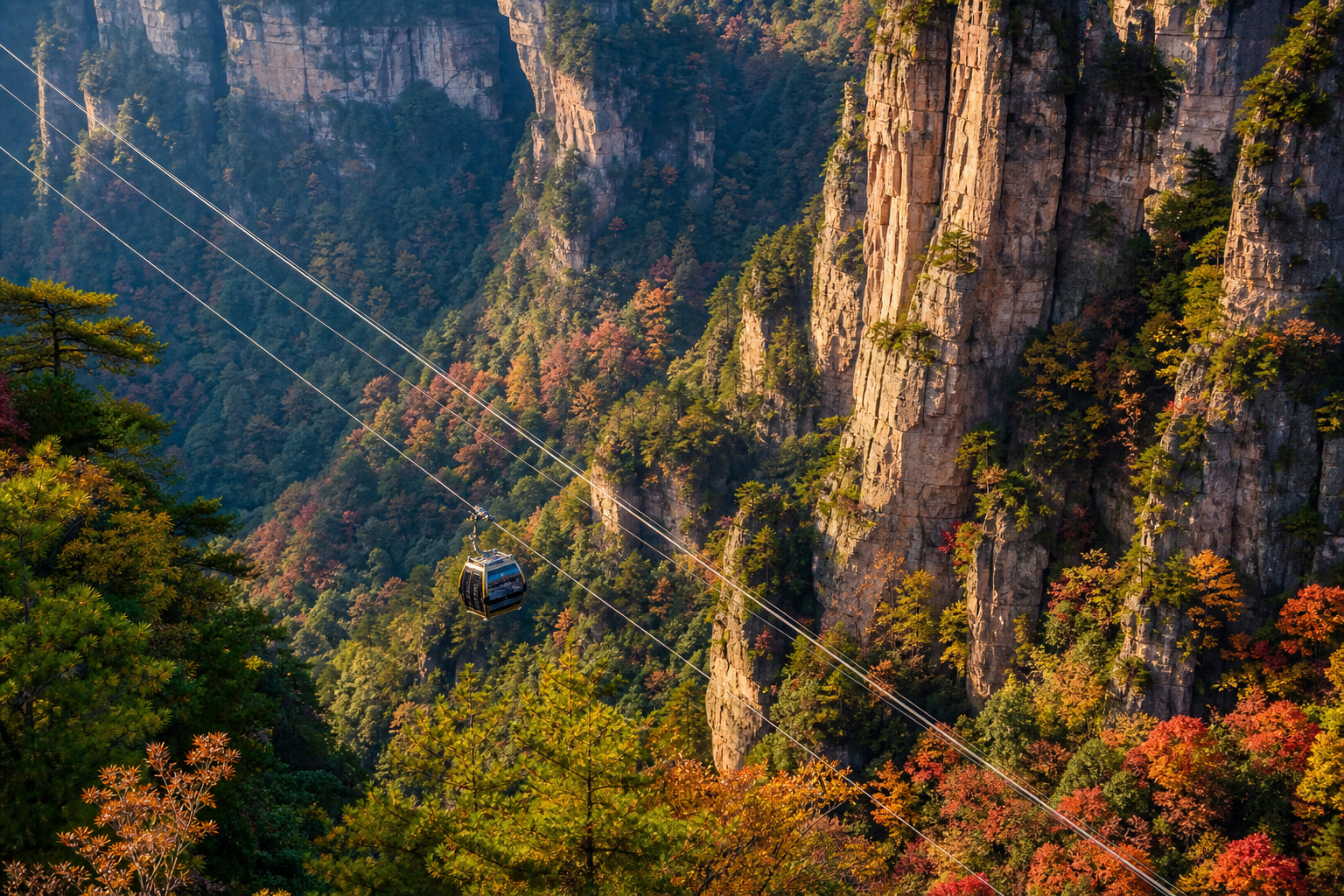
Sea of clouds in Zhangjiajie
The sea of clouds is one of the most distinctive natural landscapes in Zhangjiajie.
When clouds and mist appear in the mountains, towering quartz sandstone peaks emerge from the clouds, and distant mountain peaks layer upon layer create a spectacular landscape.
Early morning and after rain are the times when fog is most likely to appear. Changes in weather can also make the same scenic spot present completely different views.
When is the best time to visit Zhangjiajie?
Zhangjiajie offers different scenery in each of the four seasons.
In spring, the mountains and forests gradually turn green, and the climate is comfortable, making it suitable for hiking and sightseeing.
In summer, the vegetation is lush, and the streams and waterfalls are more prominent, but the number of tourists is usually also higher.
Autumn weather is relatively cool, and the colors of the forests gradually change, creating a unique visual effect when the mountain peaks are combined with the autumn colors.
In winter, some high-altitude areas may experience snow and ice landscapes. If snowfall occurs, the peaks, forests, and clouds will create unique winter mountain scenery.
The natural heritage value of Zhangjiajie
One of the most important natural values of Zhangjiajie is its unique quartz sandstone peak forest landform.
Long-term geological movements, water erosion, and natural weathering have shaped the mountains and valleys we see today.
In 1992, Wulingyuan Scenic Area was listed as a UNESCO World Natural Heritage Site, and Zhangjiajie's unique peak forest landscape has thus attracted worldwide attention.
Today, Zhangjiajie has become one of China's representative natural tourism destinations, attracting tourists from all over the world to appreciate its unique mountain landscape.