
Potala Palace: Explore Tibet's Iconic World Heritage Site
If you're planning a trip to China and want to explore a China completely different from Beijing, Shanghai, and Xi'an, then Lhasa, Tibet, is worth adding to your travel plans.
When visiting Lhasa, one of the must-see attractions is the Potala Palace , located atop Red Hill .
The towering white palace walls, striking red palace, and golden roofs are particularly magnificent against the backdrop of blue sky and snow-capped mountains.
For many foreign tourists, the Potala Palace is not only a famous historical building, but also an important window into understanding Tibetan history, Tibetan architecture, and Tibetan culture.
In 1994, the Potala Palace was listed as a World Heritage Site. Today, it has become one of the most representative cultural landmarks in Tibet.
Where is the Potala Palace?
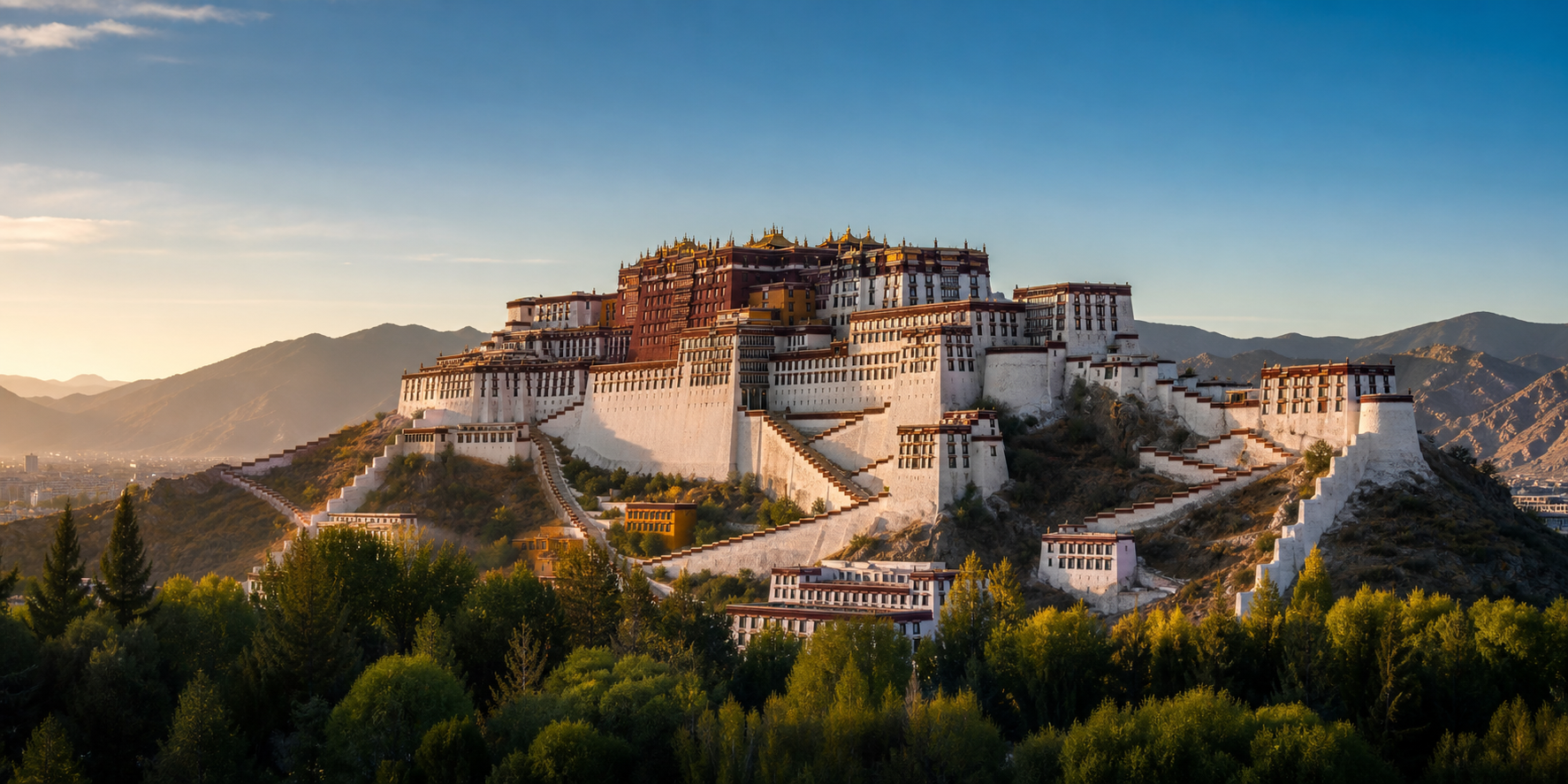
The Potala Palace is located in Lhasa, Tibet Autonomous Region, China, and sits atop Red Hill in the city.
The palace buildings are built against the mountain, and when you look up from Lhasa, you can see the magnificent complex stretching up the hillside.
The Potala Palace is located in Lhasa at an altitude of about 3,700 meters. Therefore, when tourists come here, they not only need to appreciate the unique highland scenery, but also need to acclimatize to the high-altitude environment in advance.
This is also one of the biggest differences between the Potala Palace and other famous historical sites in China.
The architecture, natural environment, and plateau landscape here combine to create a very unique scene in western China.
A palace with a thousand-year history
The history of the Potala Palace can be traced back to the 7th century.
According to historical records, the earliest palace and fortress buildings were related to Songtsen Gampo during the Tubo period. After a long period of historical changes, the early buildings were damaged, and later rebuilt and expanded, gradually forming the magnificent architectural complex we see today.
After the 17th century, the Potala Palace was further expanded, and major buildings such as the White Palace and the Red Palace gradually took shape.
Therefore, the Potala Palace today was not built all at once in a single period, but rather is an architectural complex that has developed over multiple historical stages.
Standing in front of the palace, it's hard to imagine that this building has stood for so long.
White House and Red Palace
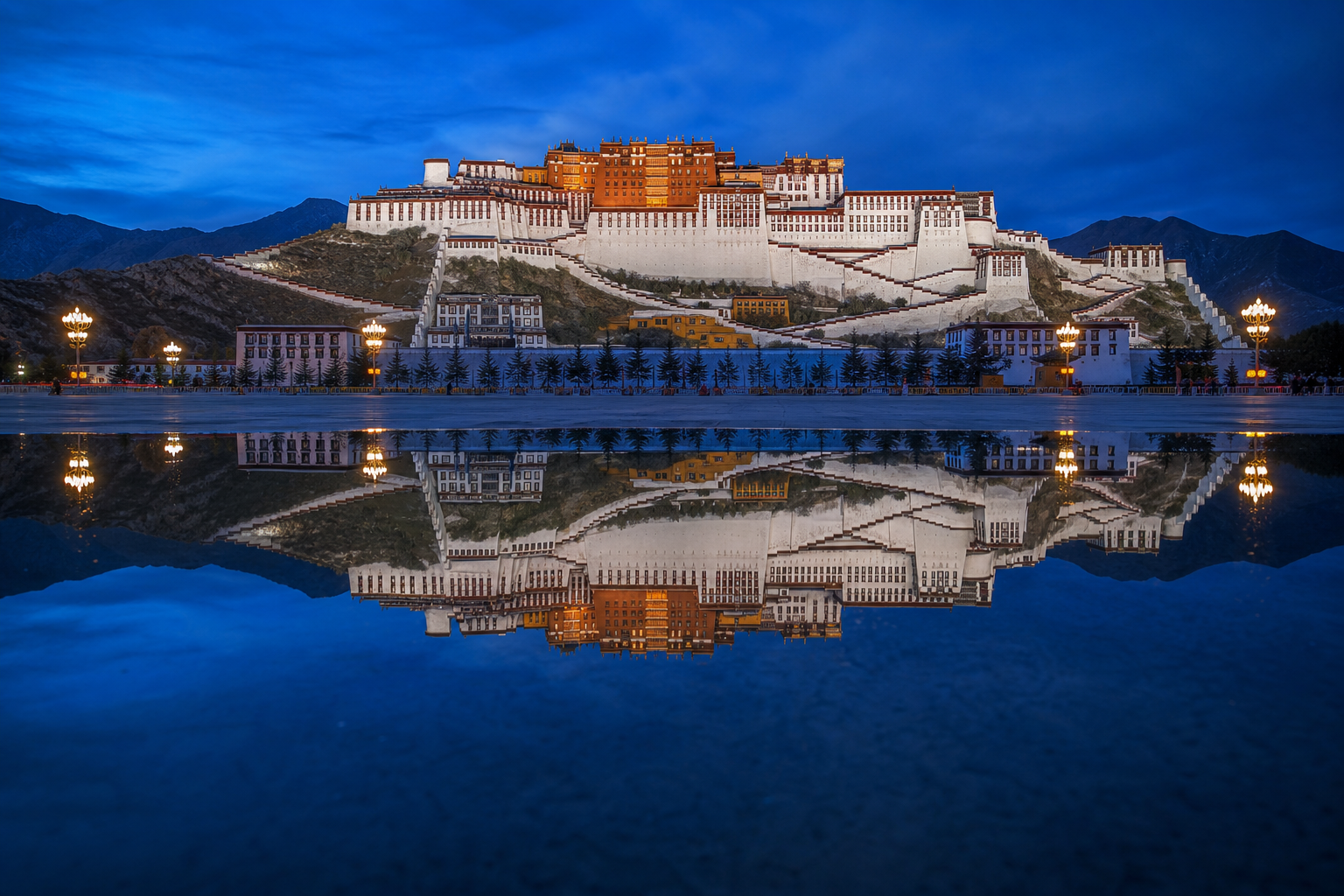
When visiting the Potala Palace for the first time, the most noticeable thing is the distinctive red and white colors of the buildings.
The White Palace is an important part of the Potala Palace complex. Its exterior is predominantly white, and the building is massive, containing many palaces and halls.
The Red Palace is located in the central area of the complex, with its red exterior walls and golden roof being very eye-catching.
The Red Palace houses a large collection of murals, Buddhist artworks, and historical artifacts, making it an important area for understanding the cultural value of the Potala Palace.
UNESCO states that the Potala Palace complex possesses a wealth of murals, paintings, sculptures, scriptures, and historical documents, making it of immense artistic and historical value.
The most unique feature of the Potala Palace is that its architecture blends seamlessly with the mountainside.
If you look at the Potala Palace from a distance, you'll see that it's not simply built on flat ground.
The entire palace extends upwards along the terrain of Red Mountain, with its massive walls forming a natural connection with the mountain.
This architectural style makes the Potala Palace appear as if it grew out of the mountains.
The towering palace walls, layered buildings, golden roofs, and surrounding mountain landscape combine to create a very strong visual effect.
This is why many tourists visiting Lhasa for the first time consider the Potala Palace to be one of the most unforgettable sights during their entire trip to Tibet.
Step into the Potala Palace and experience Tibetan architectural art.
The Potala Palace is not only grand in scale, but its architectural details are also very worthy of appreciation.
Inside the palace, you can see exquisite murals, sculptures, and traditional decorations.
The murals on the walls depict a wide range of religious, historical, and cultural themes.
The wood carvings, paintings, and gold ornaments in the building also reflect the unique Tibetan architectural art.
For foreign tourists, this architectural style is distinctly different from traditional Chinese architecture such as the Forbidden City in Beijing and the ancient city of Xi'an.
If you have already visited historical cities in eastern and northern China, then coming to Lhasa will reveal a more unique side of China.
Why is the Potala Palace a World Heritage Site?
The Potala Palace is famous not only for its magnificent architecture.
Its historical, religious, artistic, and architectural values together constitute its significant cultural importance.
UNESCO has listed the "Historic Complex of the Potala Palace in Lhasa" as a World Heritage Site, which includes the Potala Palace, Jokhang Temple and Norbulingka .
The Potala Palace was inscribed on the World Heritage List in 1994, and the scope of the World Heritage List was further expanded in 2000 and 2001.
Therefore, if you travel to Lhasa, you can include these places in your travel itinerary to gain a more comprehensive understanding of Lhasa's history and culture.
The blue sky and Potala Palace in Lhasa
The beauty of the Potala Palace comes not only from its architecture.
Lhasa's unique high-altitude environment also gives it a very distinctive natural landscape.
On a clear day, the blue sky and white clouds set off the red and white palace, and the golden roof stood out brightly in the sunlight.
Viewing the Potala Palace from different angles will provide you with completely different visual experiences.
The soft sunlight in the morning, the blue sky during the day, and the light and shadow at dusk all showcase different architectural charms.
For tourists who enjoy photography, the Potala Palace is also a place well worth documenting during a trip to Tibet.
What should I be aware of when visiting the Potala Palace for the first time?
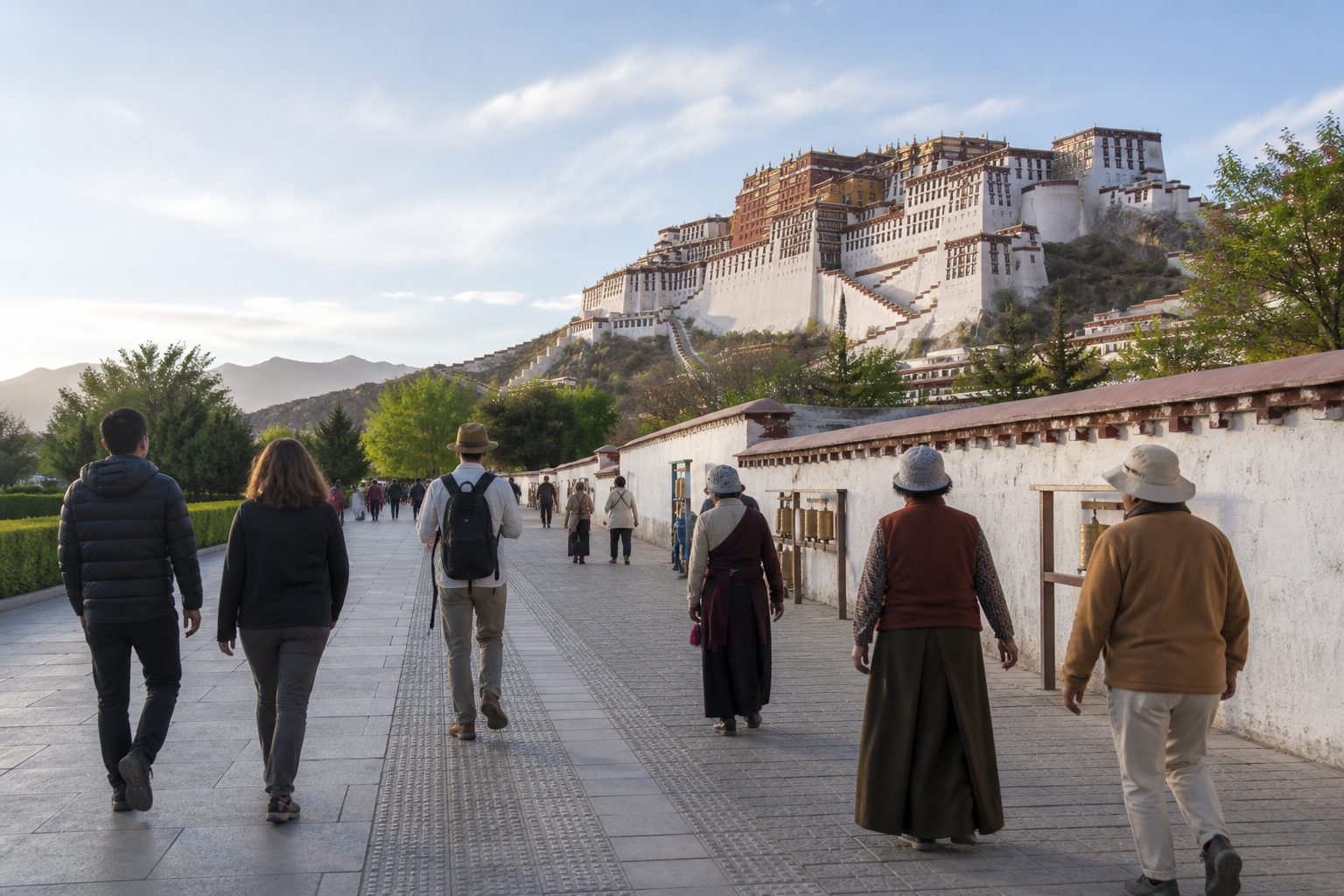
The Potala Palace is located at a high altitude, so first-time visitors to Lhasa should pay attention to their physical condition.
Don't schedule an overly rushed itinerary when you first arrive in Lhasa; allow your body time to adapt to the high-altitude environment.
Visiting the Potala Palace requires advance reservation.
Currently, the official system requires real-name reservations. During the peak season of 2026, the Potala Palace Administration announced that the opening hours will be from 9:00 AM to 3:40 PM daily, from May 1st to October 31st, and visitors are required to make reservations in advance through official channels.
Since opening hours, reservation policies, and tour routes may vary depending on the season and visitor volume, it is best to check the latest official announcements before you go.
What kind of travelers is the Potala Palace suitable for?
If you enjoy history and culture, the Potala Palace is worth a visit.
If you enjoy architectural photography, the Potala Palace is also worth a visit.
If you are interested in Tibetan culture and highland scenery, this is a rare travel experience.
For foreign tourists visiting China for the first time, the Potala Palace offers a glimpse into a China completely different from Beijing, Shanghai, and Xi'an.
Here, there is no hustle and bustle of modern cities, but a travel experience composed of plateaus, mountains, ancient buildings, and unique culture.
When traveling to Tibet, don't miss the Potala Palace.
China is a country with a rich regional culture.
In Beijing, you can visit the Forbidden City and the Great Wall;
In Xi'an, you can explore the Terracotta Army and the ancient city wall;
When you come to Lhasa, you can stand on the plateau, facing the magnificent Potala Palace, and experience the unique history and culture of Tibet.
The Potala Palace is not only a palace, but also a cultural landmark that connects history, architecture, art and nature.
When you stand on the streets of Lhasa and look up to see the red and white palace standing atop Red Mountain, you will truly understand why it is one of the most representative landscapes of Tibet.
If you're planning a trip to China and looking to explore the history and natural beauty of different regions, then Lhasa and the Potala Palace should definitely be on your travel list.
Arrive in Tibet, visit the Potala Palace, and embark on a unique journey through China.