If you travel to China, there is one place worth visiting in person – the Great Wall.
It traverses mountains, passes through forests, and spans the vast land of northern China. For thousands of years, this ancient structure has stood guard over China's mountains and rivers.
For many foreign tourists, the Great Wall is their first stop in understanding China. It is not only a stunning ancient architectural feat, but also a piece of Chinese history spanning thousands of years.
When you actually stand on the Great Wall and look at the rolling mountains in the distance, you will find that the Great Wall in the photos and the Great Wall in person are completely different experiences.
A "giant dragon" built atop a mountain ridge.
One of the most breathtaking aspects of the Great Wall is its integration with China's mountains and rivers.
It doesn't cut straight through the earth, but extends along the mountain range, crossing one mountain ridge after another, leaving a winding outline between the ridges.
Looking out from a high vantage point, the Great Wall resembles a giant dragon coiled among the mountains.
Some sections of the road are flat and open, allowing for leisurely walks; others are steep and require climbing step by step.
It is precisely through this process of walking that tourists can truly appreciate the grandeur of the Great Wall.
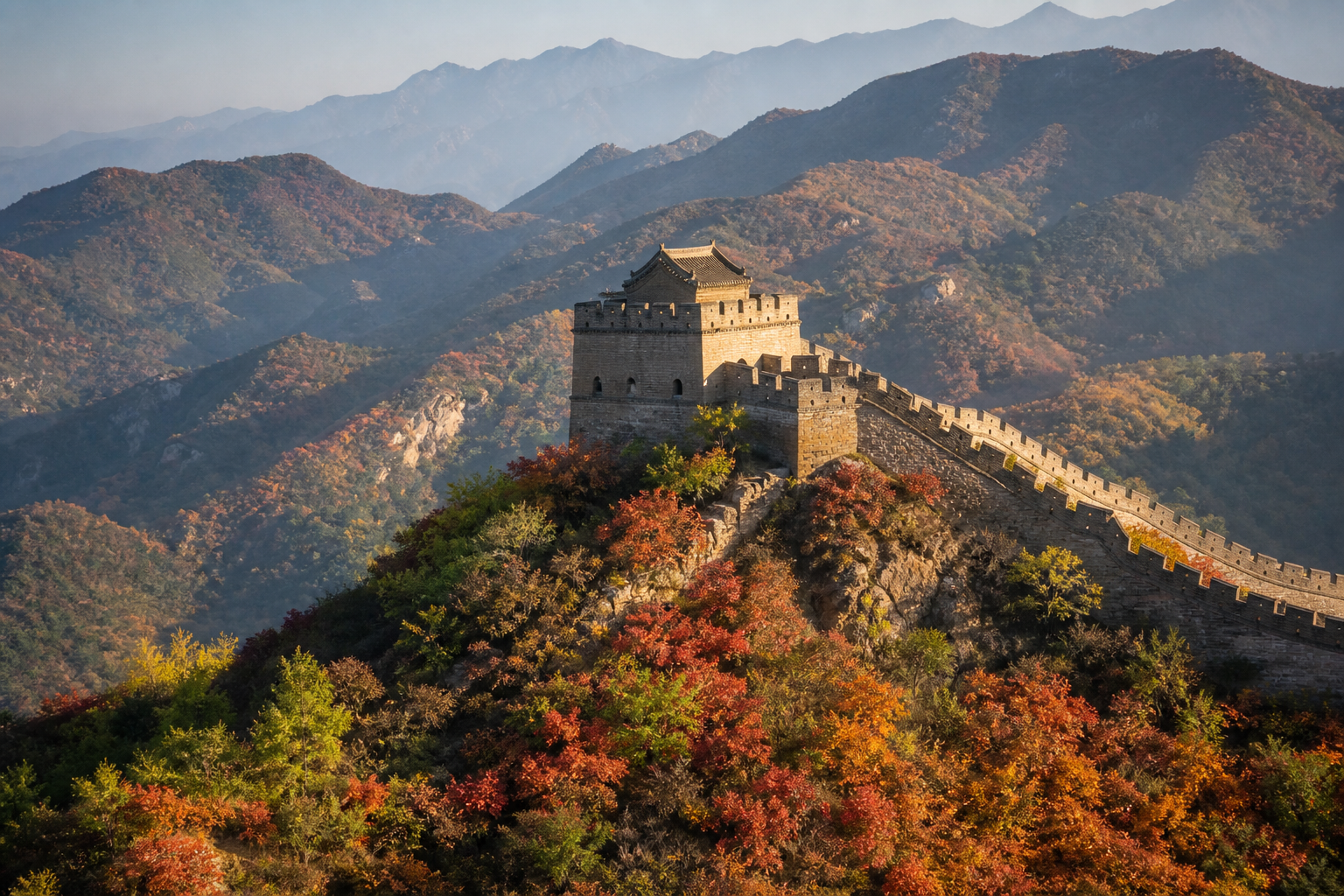
The Great Wall was not built in a single dynasty.
Many people believe that the Great Wall was built in one dynasty, but that is not the case.
Throughout China's long history, multiple dynasties have built, expanded, and maintained the Great Wall.
The early Great Wall primarily served a military defensive function. During the Ming Dynasty, the Great Wall underwent large-scale construction, and many of the well-preserved sections of the Great Wall today are related to the Ming Dynasty Great Wall.
In ancient times, without modern machinery, large quantities of bricks and stones had to be transported to the mountains by manpower, and then constructed by craftsmen to form a defensive system that stretched across the towering mountains.
When you stand on the Great Wall today, it's hard to imagine how much time and effort the ancients put in.
This is also one of the most admirable aspects of the Great Wall.
The Great Wall is more than just a wall.
The Great Wall served far more than just blocking enemies.
Along the Great Wall, you can see many different types of structures, including watchtowers, beacon towers, and passes.
In the past, beacon towers were used to transmit military information, watchtowers were used to observe the situation in the distance, and passes were important transportation and military routes.
These buildings together form a complex ancient defense system.
Therefore, the Great Wall we see today is not an isolated wall, but a massive ancient engineering project.
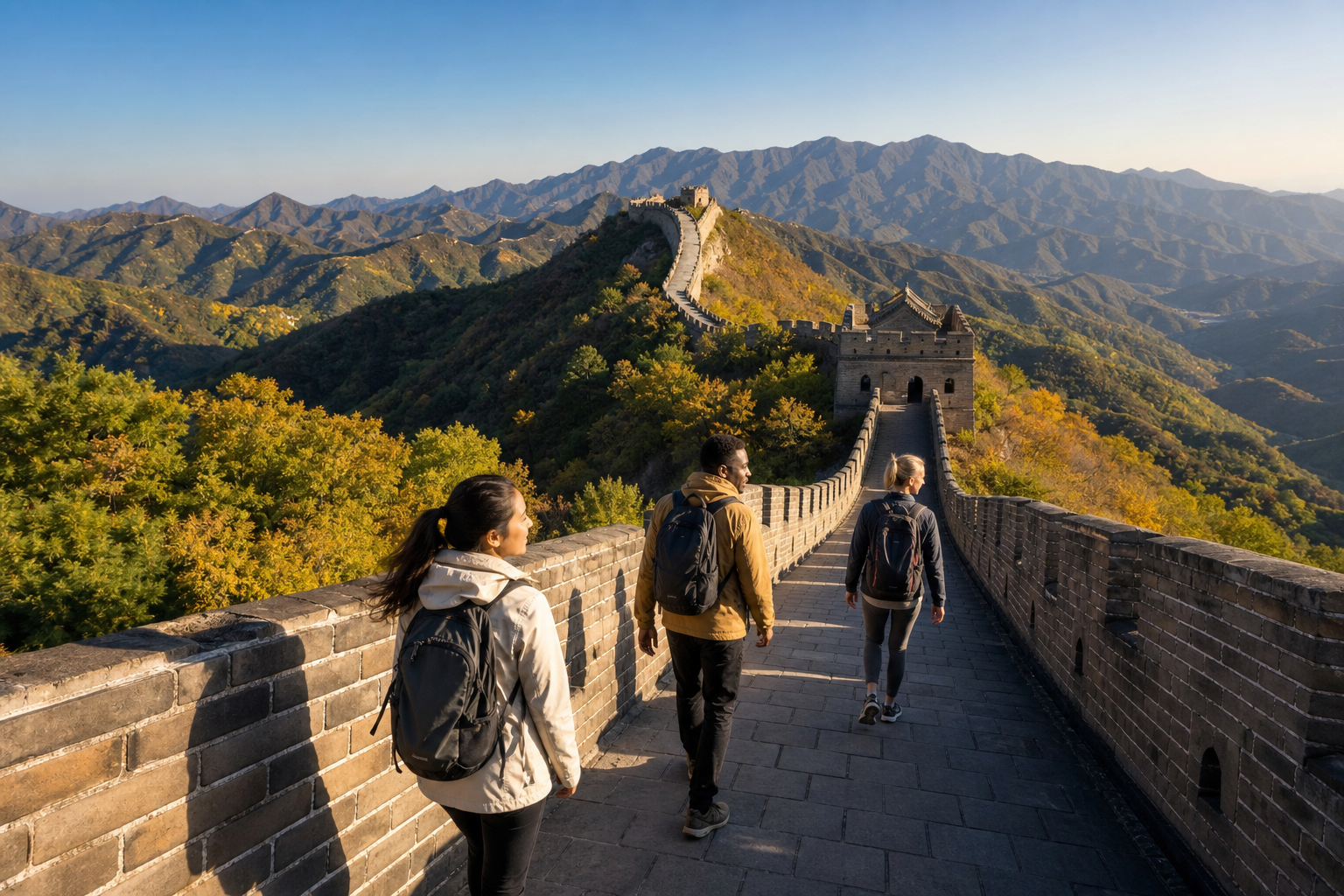
Standing on the Great Wall, looking at the mountains and rivers of China
When you come to the Great Wall, the most worthwhile thing to do is to walk along it slowly.
Don't rush to take photos, and don't just check in.
As you walk along the ancient city wall, the mountain breeze blows past you, and in the distance, you see rolling mountains, while beneath your feet lie bricks and stones weathered by time.
In spring, the mountains gradually turn lush and green;
In summer, the forests are lush and the mountains are verdant.
In autumn, the mountains and forests turn golden, orange and red, with the Great Wall winding through them, creating a magnificent autumn landscape.
In winter, heavy snow covers the mountains, and the ancient city walls stand out against the white snow.
Therefore, you can see different scenery when you visit the Great Wall in all four seasons.
Badaling, Mutianyu and Jinshanling
The Great Wall of China is not a single scenic area, but is distributed in multiple regions.
Badaling Great Wall is one of the most famous sections of the Great Wall. It is close to Beijing and easily accessible, making it a popular choice for many foreign tourists visiting China for the first time.
The Mutianyu Great Wall boasts a beautiful mountain and forest environment, where the Great Wall blends seamlessly with the forests and valleys, making it ideal for tourists who enjoy natural scenery and photography.
Jinshanling Great Wall offers a more expansive mountain landscape, with some sections preserving the ancient and rustic features of the Great Wall, making it suitable for travelers who enjoy hiking and photography.
The Great Wall in different regions has different history and scenery.
Therefore, if you have enough time to travel, you can choose a suitable section of the Great Wall based on your interests.
Why is the Great Wall so attractive to foreign tourists?
China has a long history and rich culture, and the Great Wall is a window into understanding Chinese history.
Here, you can not only see an ancient building, but also the magnificent natural landscape of northern China.
You can stand on the city wall, which is hundreds of years old, and touch the ancient bricks and stones, or look out at the distant mountains and rivers.
This kind of travel experience, which combines history and nature, is something that many modern cities cannot provide.
For foreign tourists visiting China for the first time, the Great Wall is also a place where it is very easy to understand Chinese culture.
It does not require complex language explanations.
When you walk on the Great Wall yourself, you can feel its scale, history and power.
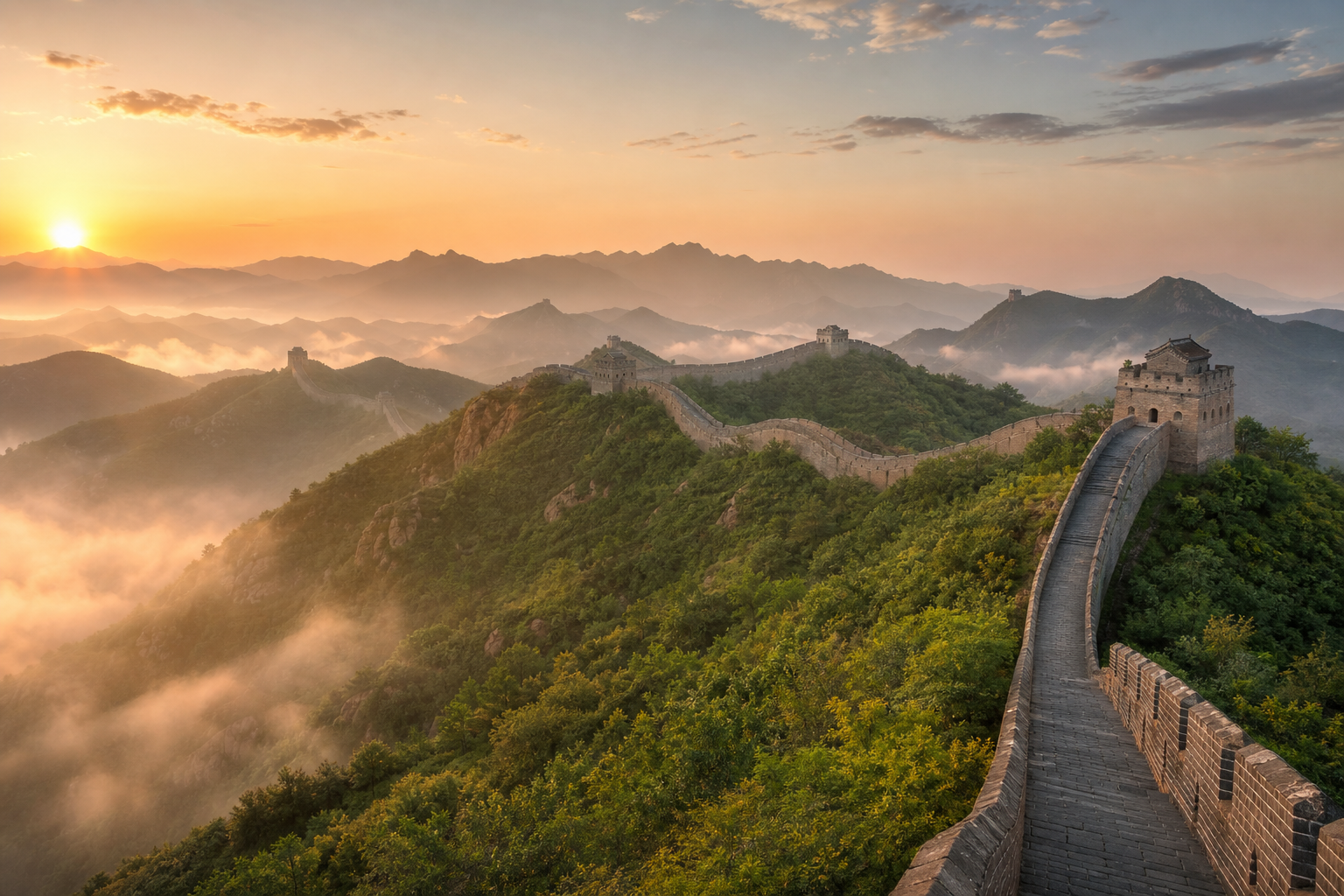
You should visit the Great Wall at least once in your life.
Sometimes, travel isn't about how many places you visit, but whether you encounter a place that truly stays in your memory.
The Great Wall is such a place.
When you stand on the mountaintop and look at the Great Wall stretching from your feet into the distance, you will suddenly understand why this ancient structure has become one of the most important cultural symbols of China.
It has witnessed thousands of years of Chinese history, as well as the efforts and years of countless people.
If this is your first time visiting China, you might as well walk along the Great Wall yourself.
Don't get to know it just by looking at a photo.
Walk up there, take a slow stroll, look at the mountains, the ancient city walls, and this country with its long history and civilization.
Only when you stand atop the Great Wall can you truly understand why it is one of the most famous historical buildings in the world.