The Qinling Mountains stretch eastward, forming the 800-li (400 km) spine of the Funiu Mountains in western Henan Province. Mount Laojun, located in Luanchuan County, Luoyang, stands majestically here. Its 2217-meter-high Jade Emperor Peak pierces the clouds. Sculpted by 1.9 billion years of geological history and imbued with 2000 years of Taoist tradition, this mountain possesses both the grandeur of a "World Geopark" and the ethereal beauty of a "Unparalleled Sacred Realm." Natural wonders and human faith embrace each other here, composing a timeless ode to the mountains, waters, and Taoism.
Laojun Mountain, formerly known as Jingshi Mountain, was renamed after Laozi, the founder of Taoism, who is said to have secluded himself there for cultivation. In the late Spring and Autumn Period, Laozi rode a blue ox westward out of Hangu Pass, wrote the five-thousand-word *Tao Te Ching*, and then sought out this secluded mountain, with its deep forests and clear, tranquil air, to build his hermitage. He absorbed the mountain's spiritual energy, comprehended the ultimate principles of nature, and left behind the philosophical thought, "The Tao gives birth to One, One gives birth to Two, Two gives birth to Three, Three gives birth to all things." From then on, Jingshi Mountain became a sacred site of Taoism. The Laojun Temple was first built in the Northern Wei Dynasty to commemorate him. During the Zhenguan era of the Tang Dynasty, Emperor Taizong bestowed the name "Laojun Mountain," and Emperor Shenzong of the Ming Dynasty declared it a "famous mountain under heaven." For over a thousand years, its incense has burned continuously, and its Taoist spirit has flowed eternally.
Stepping into Laojun Mountain, the first thing you encounter is the breathtaking artistry of nature. Ascending by cable car through the clouds, the mist swirls below, the mountains appearing and disappearing in the sea of clouds, like a flowing ink painting scroll. Reaching the Ten- Mile Screen , you realize that the saying "the most beautiful of the three mountains, the most wondrous of the five sacred peaks" is no exaggeration. A 5,000-meter-long suspended walkway winds its way along a cliff at an altitude of 1,800 meters. On both sides, granite peaks, sculpted by millions of years of wind and rain, vie for attention, with strangely shaped rocks: some resemble Lao Tzu meditating, gazing at the sea of clouds; others look like a golden turtle exploring the sea, stretching its neck to drink from the clouds; there are also wonders like the Flying Stone and the One-Line Sky, each step revealing a new scene, each step a journey to the heavens . In spring and summer, azaleas adorn the cliffs; in autumn, red maples paint the valleys; in winter, frost blankets the peaks—the scenery changes with the seasons, yet each is a natural masterpiece.
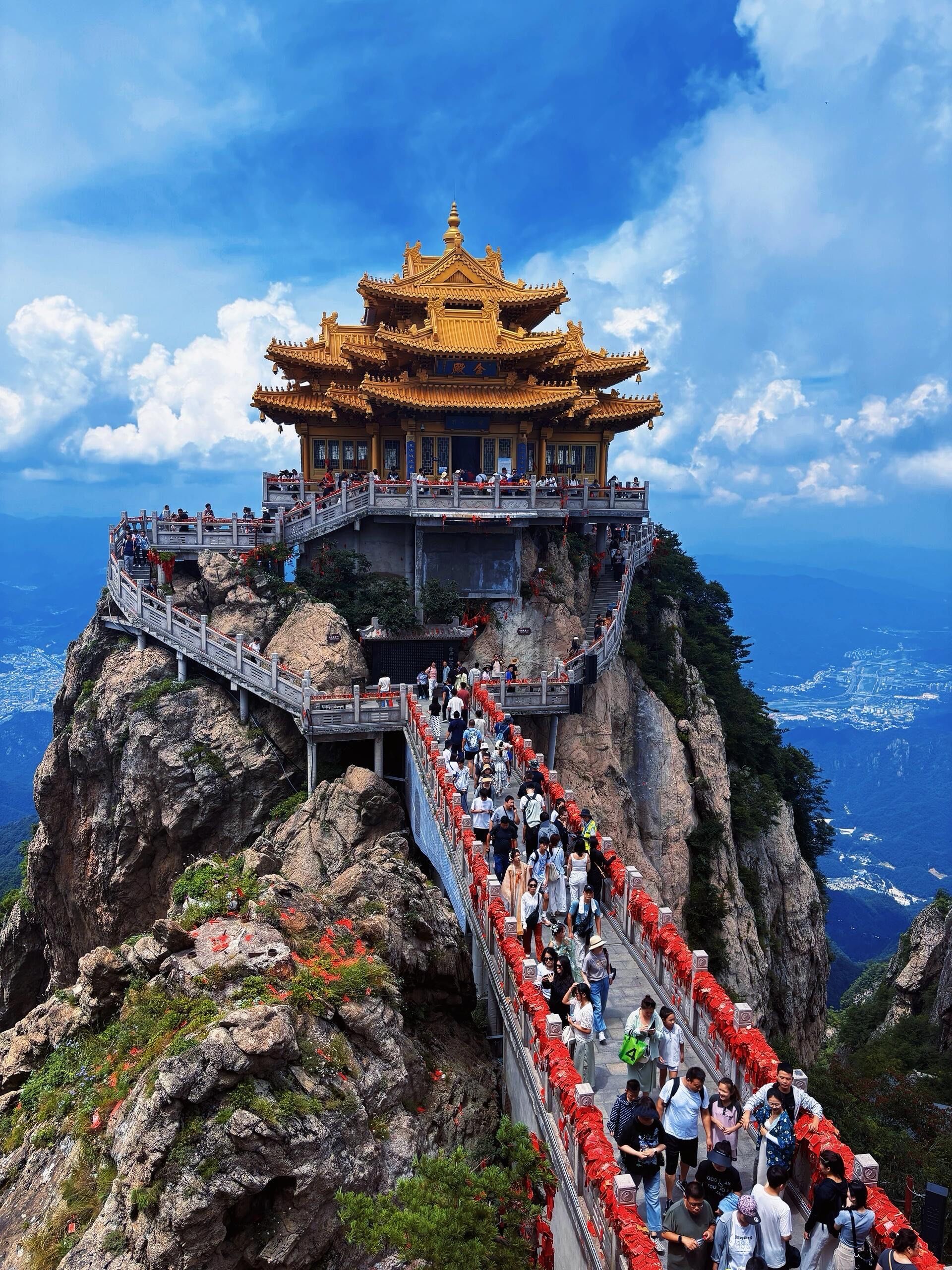
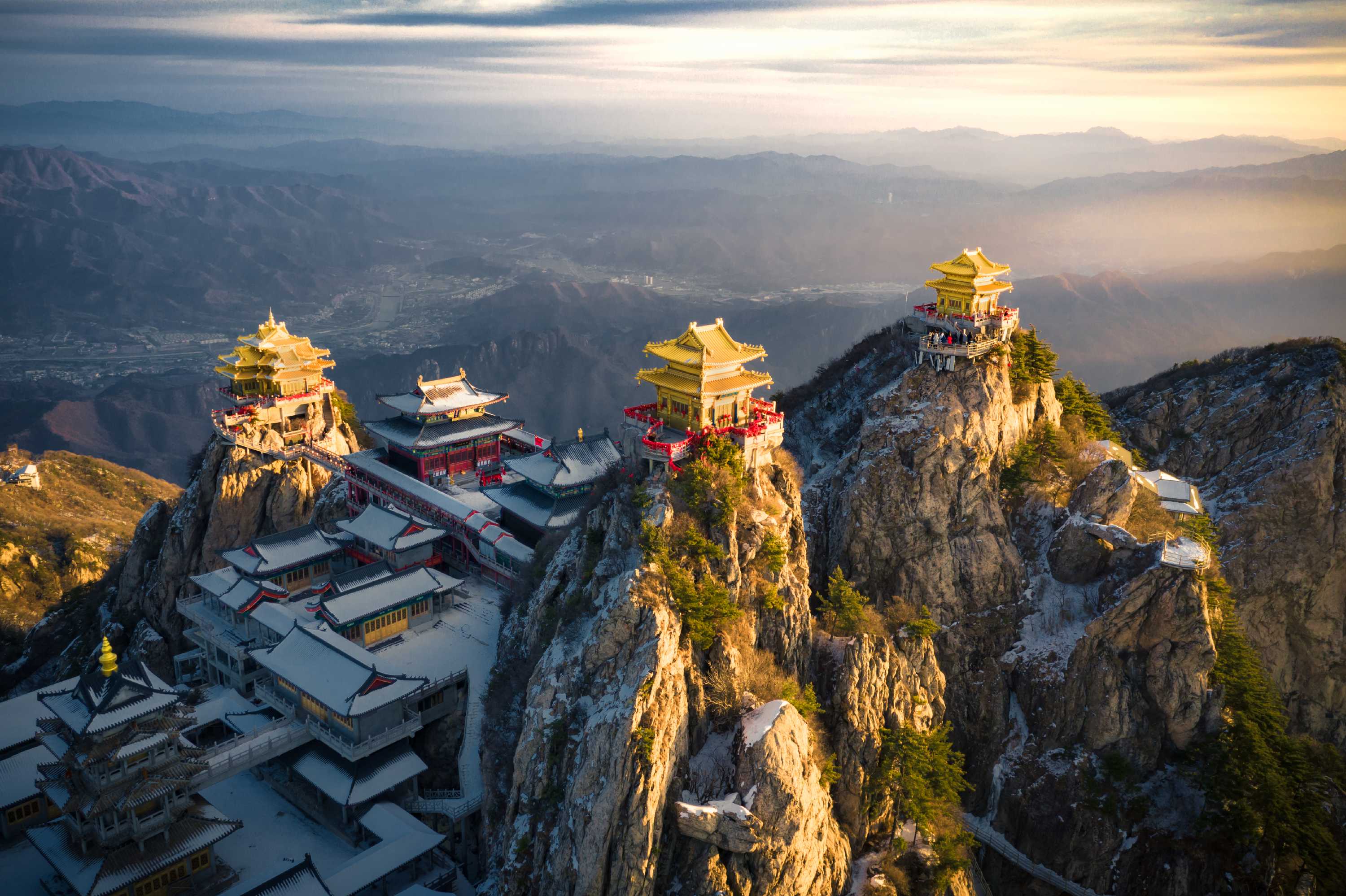
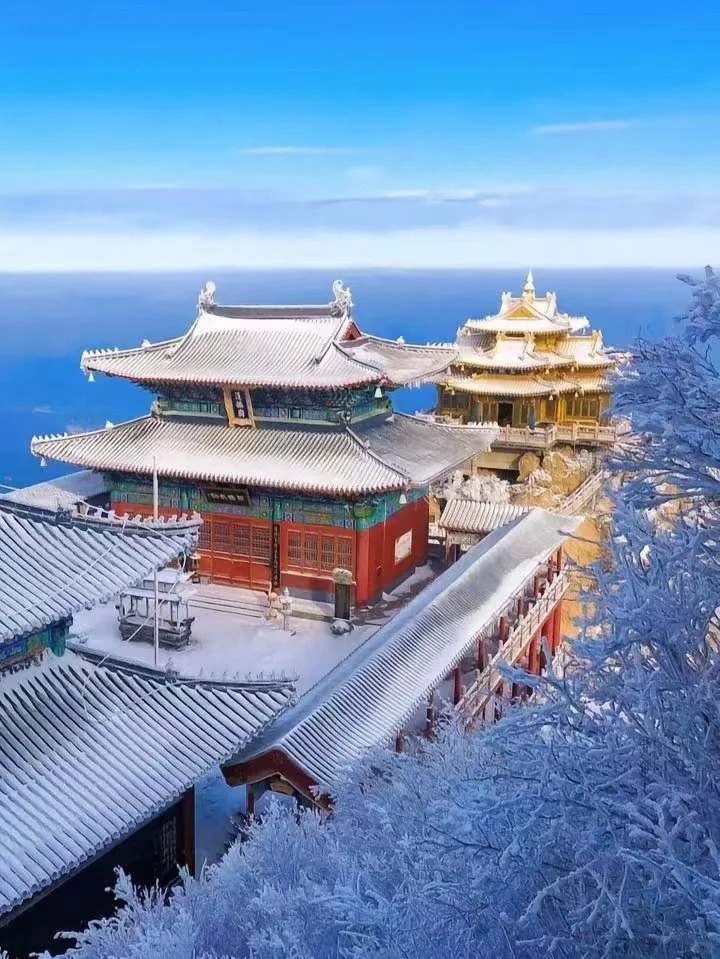
Upon reaching the summit, the Golden Summit Taoist temple complex comes into view, the soul of Laojun Mountain. Five golden halls, built against the mountainside in the style of Ming and Qing dynasty imperial palaces, gleam with gilded bronze roofs in the sunlight, their red walls and flying eaves appearing and disappearing in the mist. The South Heavenly Gate, the Morality Palace, the Bright Treasure Platform, the Jade Emperor Peak, and the Five Mothers Golden Hall stand in a row, their bronze bells at the corners ringing softly in the wind, their sounds carrying far and wide through the sea of clouds, a tranquil and far-reaching experience . At dawn, the first rays of sunlight pierce the clouds, gilding the golden summit with rosy light. The sea of clouds surges like cotton wool, making the complex seem like a celestial palace suspended in the clouds, blurring the lines between earth and paradise. After a snowfall, when the golden summit is covered in snow, the gilded gold contrasting with the white snow creates an even more sacred and solemn scene. As the wind blows, the clouds drift, making the celestial palace appear to slowly move through the sea of clouds.
Mountains gain their spirit from the Tao, and the Tao becomes more profound through the mountains. Every blade of grass, every tree, every temple, and every peak on Laojun Mountain is imbued with the millennia-old wisdom of "following the natural way." At the foot of the mountain, a 59-meter-high bronze statue of Laozi stands quietly, holding the *Tao Te Ching*, his gaze peaceful and far-reaching, as if gazing upon the land where he once preached. Incense smoke curls from ancient temples in the mountains, prayer plaques sway gently in the wind, and red ribbons carry the hopes and dreams of the people, adding a touch of gentle color to the green mountains. Occasionally, an elderly Taoist priest with white hair stands by the railing, gazing at the surging sea of clouds and chanting softly. In the utter silence, the clamor of the world is shut out by the clouds, and one's worries are lightened along with the journey .
From 1.9 billion years of geological vicissitudes to 2,000 years of Taoist heritage; from the breathtaking beauty of the Ten-Mile Painted Screen to the ethereal fairyland of the Golden Summit and Sea of Clouds, Laojun Mountain has always been more than just a mountain. It is an epic sculpted by nature, a sacred place where faith has been precipitated, and a spiritual haven far removed from the hustle and bustle of the world. Here, watching the clouds drift by, listening to the wind rustling through the ancient temples, and contemplating Taoist philosophy, one can truly understand: the greatest beauty in the world lies in the harmonious coexistence of mountains and water, and the eternal Tao; the greatest tranquility in the world lies in being amidst the clouds, with one's heart at peace with nature.