
Buddha Jumps Over the Wall: A legendary dish that introduced Fujian to the world
If we were to select the most legendary Chinese dish, Buddha Jumps Over the Wall from Fujian would definitely be on the list.
It has an unforgettable name, a story passed down for centuries, and a rich, fragrant pot of delicacies from land and sea. For foreign tourists visiting China for the first time, Buddha Jumps Over the Wall is not only a classic dish at high-end banquets, but also a window into understanding Fujian's food culture and the art of Chinese cooking.
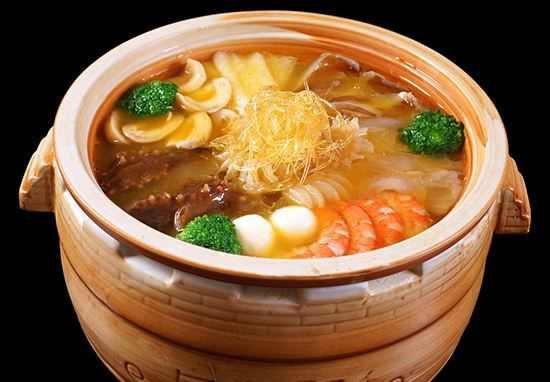
If you come to Fuzhou and only visit the Three Lanes and Seven Alleys without tasting a bowl of steaming hot Buddha Jumps Over the Wall, then your trip to Fujian will be missing one of its most representative flavors.
Why is it called "Buddha Jumps Over the Wall"?
The name "Buddha Jumps Over the Wall" always fills people with curiosity when they see it for the first time.
Could it really be related to Buddhism?
Legend has it that during the Qing Dynasty, a restaurant in Fuzhou stewed a pot of fragrant food. The rich aroma wafted to the vicinity of a temple, and even the monks who were practicing meditation couldn't help but praise it. There was even a saying that "Buddha would abandon his meditation and jump over the wall to come after hearing it," hence the name "Buddha Jumps Over the Wall."
Although this story is more like a folk tale, it vividly conveys the idea that the aroma of this dish is irresistible.
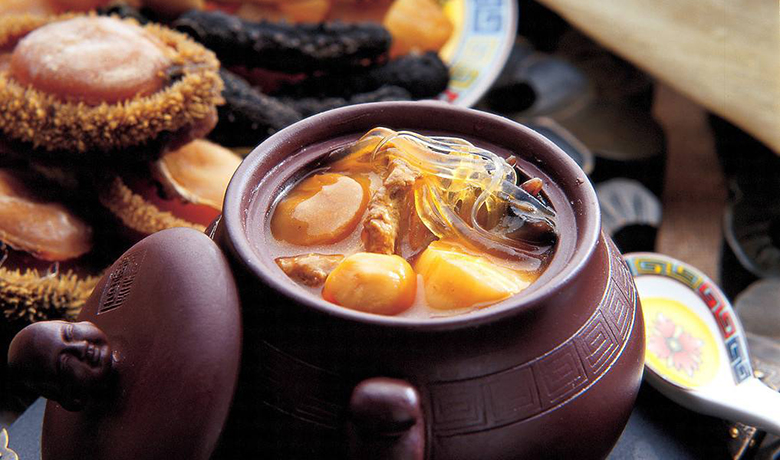
Today, "Buddha Jumps Over the Wall" has become one of China's most famous traditional dishes and is also the most internationally renowned representative of Fujian cuisine.
A jar of vegetables encapsulates the ocean and forests of Fujian.
Fujian, nestled between mountains and the sea, has been an important starting point of the Maritime Silk Road since ancient times.
This area boasts abundant seafood resources and a variety of mountain delicacies. Therefore, the most distinctive feature of Buddha Jumps Over the Wall is that it brings together precious ingredients from the ocean and the mountains in the same ceramic jar.
Traditional Buddha Jumps Over the Wall usually uses more than ten or even twenty kinds of ingredients, such as:
- abalone
- sea cucumber
- Fish maw (swim bladder)
- Dried scallops
- Shark fin (modern restaurants often replace it with sustainable alternative ingredients).
- pigeon eggs
- mushroom
- winter bamboo shoots
- Pig tendons
- Ham
These ingredients are not simply stewed together, but are processed separately and then added in order to Shaoxing wine, broth and other seasonings, and then sealed in an earthenware jar for a long time to simmer.
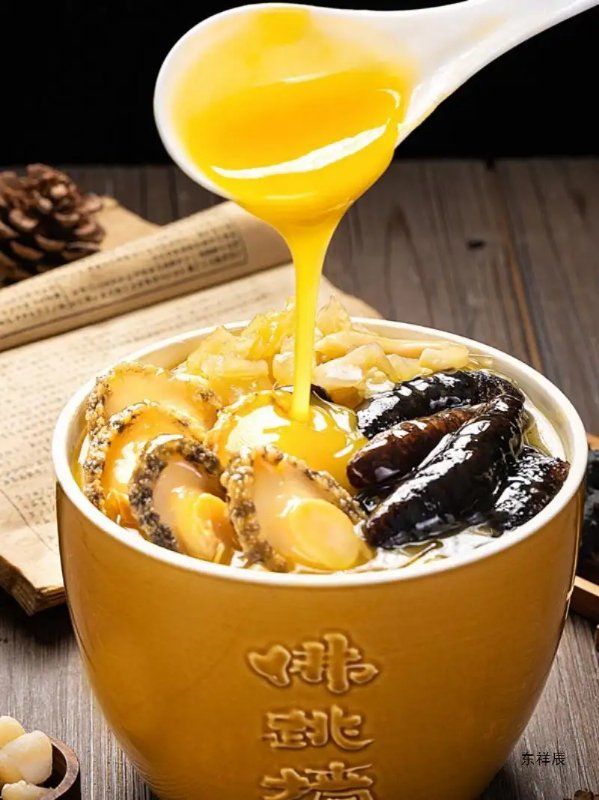
Time is the most important secret to this dish.
After stewing for several hours or even longer, each ingredient absorbs the umami flavor of the others, ultimately creating a rich, flavorful yet non-greasy taste.
The first sip of the soup is all it takes to understand what "fresh, fragrant, and rich" truly means.
When serving Buddha Jumps Over the Wall, it is usually placed in a small earthenware jar.
The moment the lid is lifted, a burst of heat, along with the aroma of wine and seafood, wafts out – one of the most unforgettable moments for many tourists.
Take a sip of soup first.
It's rich, but not cloying.
Sea cucumber is soft and tender, abalone is fresh and firm, fish maw is delicate and smooth, and dried scallops bring a natural ocean flavor.
Each ingredient has its own unique characteristics, yet they all combine to form a harmonious whole in the same pot of soup.
This is precisely the charm of Fujian cuisine in its "harmonizing of all flavors".
Where in Fuzhou can you experience Buddha Jumps Over the Wall?
If you come to Fuzhou, there are three main types of places where you should try Buddha Jumps Over the Wall.
Old brands around Sanfang Qixiang
This area is home to many traditional Fujian restaurants that have been operating for decades, where you can not only savor the classic Buddha Jumps Over the Wall but also experience the cultural atmosphere of the ancient city of Fuzhou.
Authentic Fujian Cuisine Restaurant
If you want to experience a more complete traditional banquet, you can choose a restaurant that specializes in Fujian cuisine, which usually offers individual portions, small jars, and versions for sharing among multiple people.
High-end banquet experience
Some five-star hotels also offer upgraded versions of Buddha Jumps Over the Wall, using a wider variety of ingredients, suitable for tourists who want to experience high-end Chinese banquet culture.
Prices typically range from a little over one hundred yuan to several hundred yuan, with different specifications suitable for different budgets.
How do foreign tourists enjoy Buddha Jumps Over the Wall?
For first-time visitors, they can savor the experience slowly, just like the locals in Fuzhou.
- First smell the aroma, then drink the soup.
- Don't rush to stir; let the ingredients retain their original layers.
- Start by tasting the main ingredients such as sea cucumber and abalone.
- Finally, serve with a bowl of rice and enjoy the rich broth together.
This gradual approach to tasting makes it easier to appreciate the flavor variations between different ingredients.
The Chinese Banquet Culture Behind Buddha Jumps Over the Wall
In traditional Chinese culture, a dish is not just food, but also embodies the way of hospitality.
Buddha Jumps Over the Wall is often served at festivals, weddings, family reunions, and important banquets, symbolizing abundance, reunion, and blessings.
For many foreign tourists, tasting Buddha Jumps Over the Wall is also an important lesson in experiencing Chinese banquet culture.
A ceramic jar contains both the gifts from the mountains and sea of Fujian and the Chinese people's understanding of sharing, delicious food, and gathering.
When you come to Fuzhou, you might as well stop by for a bowl of Buddha Jumps Over the Wall.
During the day, you can stroll through Sanfang Qixiang and admire the ancient Ming and Qing architecture; in the evening, you can walk along the Minjiang River and feel the leisurely pace of life in Fuzhou; at night, you can step into a Fujian restaurant and uncover a pot of steaming Buddha Jumps Over the Wall.
At that moment, you are not only tasting a famous Chinese dish, but also a Fujian story spanning a century.
If you want to truly understand China's local food culture, then Buddha Jumps Over the Wall should be the first dish on your Fuzhou travel list.